Preferencia y actitud del inversor minorista hacia la inversión verde: Un paso hacia el desarrollo medioambiental de la India
Retail investor’s preference and attitude towards green investing: A step towards Environmental development of India
Wajiha Alim
Integral University (India)
https://orcid.org/0009-0008-4227-6212
Adeel Maqbool
Integral University (India)
https://orcid.org/0009-0007-3806-8747
Kiran Singh
Integral University (India)
https://orcid.org/0009-0009-9291-7652
RESUMEN
La inversión verde se ha convertido en la herramienta de inversión más importante entre los inversores minoristas, ya que beneficia a los emisores, a los inversores y, lo que es más importante, al medio ambiente. Hay ciertos factores, como la preocupación por el crecimiento del medio ambiente, la capacidad financiera, las políticas gubernamentales, etc., que influyen en los inversores individuales hacia la inversión verde, y también se dan algunas razones significativas en términos de ganancias que hacen que los inversores prefieran la inversión verde. El impacto de la decisión del inversor hacia la inversión verde puede crear bienestar en la vida de las personas y en el medio ambiente. Teniendo en cuenta la importancia de la inversión verde, el presente estudio se ha realizado con el objetivo de analizar los factores que afectan y la preferencia de inversión de los inversores minoristas hacia la inversión verde y sus beneficios para la sostenibilidad medioambiental. Se recogieron datos de 100 inversores minoristas elegidos aleatoriamente para el estudio mediante la técnica de muestreo aleatorio y la distribución de un cuestionario estructurado basado en una metodología de investigación cuantitativa. Los resultados del análisis estadístico mostraron que la inversión ecológica es segura y tiene menos riesgos, lo que hizo que los inversores la prefirieran. El estudio muestra principalmente que la fuente alternativa de ingresos es el factor que más impulsa a los inversores minoristas hacia la inversión verde, más que la preocupación por el medio ambiente, y también revela el hecho de que la sostenibilidad del medio ambiente puede mejorarse aún más gracias a estos inversores verdes.
PALABRAS CLAVE
Inversión ecológica; inversores; ingresos; medio ambiente; preferencia de inversión.
ABSTRACT
Green investment has become the most important investing tool among the retail investors since it benefits the issuers, investors and most importantly the environment. There are certain factors like concern for environment growth, financial ability, government policies, etc. which influence the individual investors towards green investing and also some significant reason occurs in terms of earnings which makes the investors preference in the direction of green investment. The impacts of the investor’s decision towards green investing might create welfare on the people’s life and the environment. Considering the importance of green investment, the present study has been worked with an objective to analyse the factors affecting and the investment preference of the retail investors towards green investing and its benefits on the environmental sustainability. Data was collected from the 100 retail investors who were chosen randomly for our study through random sampling technique by distributing structured questionnaire based on a quantitative research methodology. Results from statistical analysis depicted that the green investment is safe, secured and has less risks which made the investors to prefer green investment. The study mainly shown that the alternative source of income is the most driving factor of the retail investors towards green investing rather than the concern for environment and also revealed the fact that the environment sustainability can be enhanced further because of these green investors.
KEYWORDS
Green investment; investors; income; environment; investment preference.
Clasificación JEL: Q5, Q51
MSC2010: 91B74
1. INTRODUCCIÓN
Green investment is important in financing green and renewable energy projects to decrease carbon emission and its negative effects towards health, improve climate resistant groundwork for cities and guarantee the sustainability of environment (Taghizadeh-Hesary & Yoshino, 2019). Green funds, a specific form of corporate social responsibility (CSR) action that includes the distribution of financial and elusive resources of organisations to convert strategies of the environment and purposes into corporate activities and advanced performance of the environment. The main concept of resolving the inconsistency among growth of the economy and protecting the environment lies in integrating ecological factors into corporate investment decision-making process (Yutao Chen & Feng, 2019).
The development of social and ecological relations among the humans and nature is a known concept. Since there occurs several problems on the environment like pollution, deforestation, plastic production, greenhouse gas emissions etc. which are been generated by human beings, those environmental problems can be solved by means of making the human’s actions eco-friendly. Thus, protecting the environment seems to be vital in many sides which significantly includes the financial side. The financial markets have attraction towards green investments considering for the protection of environment. Socially Responsible Investment (SRI) used in the financial market to point out the significance of the investments with the ethics of socially responsible growth directing towards Environmental, Social and Corporate Governance (ESG) factor (Walczak et al., 2021). ESG and SRI have created not only on the basis of trusted investing but also on the civil rights, anti-war and environmental movements. The climatic change and the deprived corporate governance made a huge promoter in ESG investment growth (Townsend, 2020). SRI is a method that intended to join both financial income and environmental wellbeing. The need to generate SRI signifies a main argument in the decision making of investment which make other organisations and investors to develop strategic plans built on ESG factors further than financial reason (Palma-Ruiz, Castillo-Apraiz, & Gómez-Martínez, 2020).
Investors might see the issuance of green bonds in green investing simply as the attempt of the organisation to attain the funds from the investors with the factors of ESG. The purposive feature of green bonds is application of the incomes which facilitates verifiable projects that are proposed to enhance the environmental effects (Baulkaran, 2019).Green and climate bonds under green investing have gained concentration in the recent years as main tool to finance the change in the direction of low-carbon economy. Since, it provide various benefits for investors, issuers and policymakers. For issuers, it enhance the organisation level through environmental ways and financial performance. For investors, it is attractive for both income seeking investors and environmentally responsible investors (Deschryver & De Mariz, 2020). The financial market has observed great growth in green investing which is an investment method that think through factors of ESG in the management (Avramov et al., 2022).
Green investing concentrates not only on aiming in financial perspective but also in ESG principles. This method of investment attained popularity by commanding the negative shades under SRI but its range has extended considerably in contemporary years (Pástor, Stambaugh, & Taylor, 2021). When it comes to green investing, it seems to be essential for investors, to attain sufficient money. In green investment, the issuers receive the money to develop further green projects whereas the investors get fixed income in terms of interest. Green bonds are similar to any other corporate bond, but it is termed as ‘green’ as the issuer promises to use their money for eco-friendly projects through following sustainable values (Agliardi & Agliardi, 2019). Though green investment benefits both the investors and issuers, there are very few number of studies that made a research about it. But, those studies have also not researched particularly on the main factor which influences the investor’s investment attitude, their preference on choosing green investment and the benefits on the environment because of green investors. From this viewpoint, the effort and involvement of the present study would hold a significant position among the existing researches.
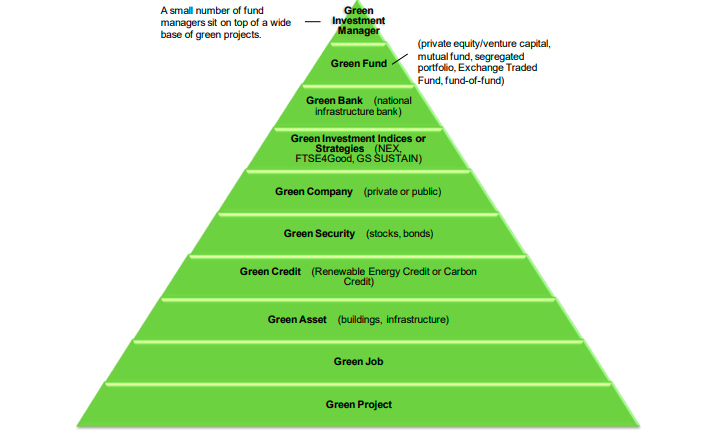
Figure 1. Green investment pyramid (Inderst, Kaminker, & Stewart, 2012)
1.1. Significance of the study
Green investing have created importance among the retail investors. As green investing pave for both the financial income and the sustainable growth of environment, many individual investors likely to move towards green investment. As very few studies have concentrated on green investment and its benefits, the proposed study specifically analysed on the investor’s preference towards green investment and the drivers which make them to keep on proceed in the green investment, further the environmental welfare based on the green investments.
1.2. Problem statement
Green investments are the investments that concentrates on the environment improvements by influencing the investors through financial benefits. Rather than other types of investment, green investing gained a major response from the individual investors (Inderst et al., 2012). Though, green investment supports both the investors and issuers, there are only very less number of studies found and those studies have also not concentrated on the investor’s engagement between both the financial benefit and the socially responsible factor when deciding the investment preference. Hence, it’s being found very difficult for the investors and researchers to get knowledge about the green investment and so the present study made a peculiar effort to fill those problems through creating a research which will provide the information about green investment and the investors investing behaviour and preference for choosing green investment.
1.3. Research objectives
•To assess the evolution and practices of green investing (or) Socially Responsible Investing (SRI) and its associated risks
•To analyse the factors motivating retail investors for preferring green investing
•To investigate whether the level of retail investors’ environmental engagement affect their investment preferences
•To examine the effects in the attitude of retail investors’ towards green investing
2. Literature review
2.1. Drivers of green investment
There are certain factors that drive the retail investor’s investment decisions towards green investment. Some of the existing studies have analysed different drivers of green investment that make the retail investors as a green investor. One of the considered research (Tawiah, Zakari, & Adedoyin, 2021) was developed to analyse the factors that influencing green investment. Data was collected from 123 developed and developing nations which was calculated by Pre-regression and econometric modelling and the output revealed that economic development greatly influences the green investment. Likewise, (Peng et al., 2021) investigated the various kinds of environmental policy affecting on various green investment behaviours. Samples was collected from the eco-industrial parks through interviews and questionnaires. The outcome showed that compared to incentive regulation, the environmental regulation has a significant relation with the intentions of green investment.
Similarly on the other viewpoint, the financial benefit is seemed to be the motivating factor towards green investment and the existing research (Yufeng Chen & Ma, 2021) examined the relationship among the green investing and the performance of the organisation. Data were collected from the organisations in China during the period of 2008-2017 from China Stock Market and Accounting Research Database-CSMAR. The outcome disclosed that green investment has a significant relationship with the financial enhancement and hence, improving financial performance is one of the driving factor for green investment. Likewise the environment regulations is also one of the factor that influence the investors into green investing and hence, one of the previous research (Huang & Lei, 2021) investigated the effects of environment policy on green investment. Data were gathered from the china listed firms during 2008-2016. The results demonstrated that green investment has a significant relationship with the environmental policies. Thus, one of the affecting factor towards green investment is the environmental regulations. Likewise, the another study (Vătămănescu et al., 2021) evaluated before and after pandemic and it collected the data from 977 Millennial and Gen Zers which was executed on generational theory and the result revealed that consumers gets satisfied by attaching with the social sustainability practices which are provided by the organisations which also benefits their financial abilities especially after pandemic.
2.2. Forms and benefits of green investment
There occurs several benefits for the investors, issuers and also for the environment in implementing green investment. Some of the previous researches have examined the various benefits of green investing. By accepting a propensity score matching method, one of the existing study (Gianfrate & Peri, 2019) gathered information from 121 European green bonds delivered between 2013 and 2017 and the results found that green investments are more economically suitable than non-green investments. The benefit is greater for corporate issuers and it also found that green investment beneficially support in greening the environment without affecting the financial status of the issuers. Green investment provide financial benefits and as well (Maltais & Nykvist, 2020) addressed the elements that attracts both the issuers and investors to green investment, the role of green investment in flowing investment to more economic environmental activity, and how it influences the organisations decisions with sustainability. 22 in depth interviews were conducted with the issuers and investors in Swedish green investment market between 2017 and 2018. It was found that there are certain direct financial reasons, specifically for issuers which benefits them in the cost of investment. Though, respondents are more constant in directing to advantages like attracting both customers and staff. Also (Falcone & Sica, 2019) provided the experimental proof on challenges and opportunities in green financing concentrating on the financial aspects that might influence on the green investment decisions of the firms. Data were collected by conducting debates between financial performers through seven semi-structured interviews over telephones during April – May 2018. The results revealed that the involvements of effective policy should need to be made sure that the aims of those policies are angled towards attaining financial benefits.
Similarly, green investment offer benefits on both the economic development and the environment welfare. The conventional research (Zhou, Tang, & Zhang, 2020) aimed to evaluate the effects of green investment on economic growth and to the quality of environment. Data was collected from 30 provinces and from cities in China between 2010 and 2017 based on environmental Kuznets curve theory and the results showed that there exists a positive impact on enhancement of the environment in terms of green investing. Green investing also reduces the gas emissions and so the existing study (Jha & Bakhshi, 2019) purpose was to develop green investment in all the levels of the countries. Data were gathered based on the secondary sources from the investigators on universal green investment and focused on the developing nations like India and the outcome analysed that green investment will significantly reduce the emissions of greenhouse.
2.3. Research gaps
•One of the study (Yufeng Chen & Ma, 2021) discussed only about the green investment performance with some organisations based on only the external environmental factors rather does not concentrated on internal factors that affects the organisation characteristics.
•Likewise, (Peng et al., 2021) does not differentiated the association among green investment behaviour and the environmental regulations in wider areas.
•The study proposed by (Vătămănescu et al., 2021) concentrated only on the consumers of Italian Millenials and Gen Zers through convenience sampling.
•Also, (Gianfrate & Peri, 2019) limited gathering data from only small samples of investment regions focusing Europe alone which is geographically restricted instead studying in many aspects of the innovators.
•The another author (Falcone & Sica, 2019) restricted the empirical study to the qualitative analysis and does not considered quantitative method of analysis.
3. Research methodology
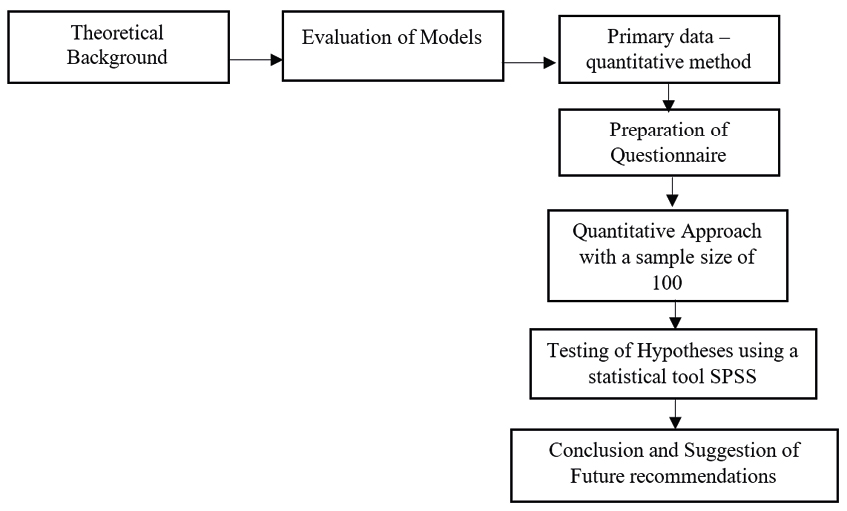
This section will briefly about the method of research used in this study. This study aims to analyze the retail investor’s preference and their behavior towards green investment and the factors driving the investors towards green investment which might result in the welfare of the environment. In the present study, primary data is used by a quantitative method, which is fetched through structured questionnaires.
Quantitative methods are used as it is strong at reviewing large sets of public and creating generalities from the sample being considered to larger sets outside the sample (Holton & Burnett, 2005). Quantitative analysis uses statistical methods with the samples collected through a structured questionnaire to justify the research objectives and framed hypothesis.
3.1 Research design
Figure 2. Research design
3.2 Research hypothesis
H1: There occurs certain development and practices of green investment among the individual investors in the universe.
H2: There are certain factors that drive the investors towards the decision of green investing
H3: There is a significant relationship between the investor’s environmental engagement and their investment preferences
H4: The attitude and behaviour of the retail investors influence the green investing decision.
3.3 Data collection strategy and Participants
The data was collected from the participants of 100 retail investors who have the awareness of green investment and who prefer the green investment rather than any other investments mostly because of the financial benefits it holds.
3.4 Data sampling and sample size
The sample size used in the present study is 100 respondents by random sampling technique for the quantitative approach through a structured questionnaire which focused on the retail investors who has the awareness of green investment.
3.5 Research instruments
The research instrument is referred to as a tool that is used to calculate, examine and gather data based on the research interests which is being proposed. The research used a quantitative approach. The quantitative method used a structured questionnaire as a research tool featuring the structure of questions engaged in collecting valuable data from the participants. These tools were especially effective in finding out the retail investor’s attitude and preference towards green investment and factors that drive the individual investors towards green investment which might result in the welfare of the environment.
3.6 Data analysis
The quantitative method used a statistical tool called Statistical Package for Social Science (SPSS) excel for examining the correlation, regression, and ANOVA analysis based on the respondent’s data in the structured questionnaire.
3.7 Ethical considerations
The research respondents will be informed clearly about the purposes of the study. They will be assured that the information gathered is strictly for educational purposes and that all the particulars will be kept confidential. The date and time for the data gathering through a questionnaire will be conferred with the participants.
4. Results
The numerical results using quantitative research methodology have been shown in this section. Responses collected from the target respondents were calculated using SPSS. These outcomes formulated are represented in the form of charts and tables in this section.
Figure 3. Preference of green investing
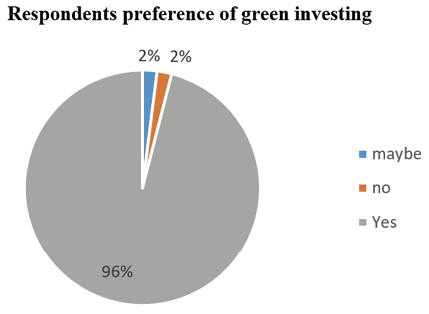
From the above figure 3, it is proven that almost 96 % of the respondents preference towards green investment which might be because of the proper awareness and the knowledge they have about the benefits of green investing
Figure 4. Preference level of the respondents towards green investing
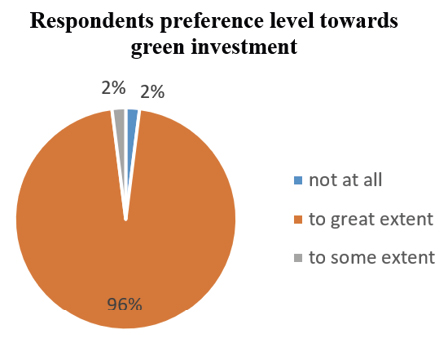
From the above figure 4, it is also proven that the 96 % of the respondents who have been selected for the survey prefers green investments at the greater extent which may be due to their need of alternative source of income or their concern towards environment.
4.1. Quantitative results
Results formulated and extracted from the SPSS tool have been listed in this section. Furthermore, to compute retail investor’s preference and their behavior towards green investment and the factors driving the investors towards green investment, certain statistical tests such as ANOVA, Regression, and Correlation analysis have been performed.
|
Green investments has less risk compared to other investments |
Assurance of principal amount is a key factor which motivates the individual investors towards green investing |
Green investing is safe and secured |
||
|---|---|---|---|---|
|
Green investments has less risk compared to other investments |
Pearson Correlation |
1 |
1.000** |
1.000** |
|
Sig. (2-tailed) |
.000 |
.000 |
||
|
N |
100 |
100 |
100 |
|
|
Assurance of principal amount is a key factor which motivates the individual investors towards green investing |
Pearson Correlation |
1.000** |
1 |
1.000** |
|
Sig. (2-tailed) |
.000 |
.000 |
||
|
N |
100 |
100 |
100 |
|
|
Green investing is safe and secured |
Pearson Correlation |
1.000** |
1.000** |
1 |
|
Sig. (2-tailed) |
.000 |
.000 |
||
|
N |
100 |
100 |
100 |
|
**. Correlation is significant at the 0.01 level (2-tailed).
Analysing correlation in data exploration is a statistical method used to calculate the power of the correlation or relationship among the measured factors and calculate their association through the significant coefficient value of Pearson. The results shown in table 1 are the results intended by considering the responses of retail investors preferring green investment. When the Pearson correlation coefficient values of the variables are observed to be the same, they are positively correlated. The Pearson coefficient value 1.000 represent that there is a positive relationship between every considered variable with every other variables. Here, there is a positive relationship between the less risk in green investments and assurance of principal amount in green investment. Likewise, the Pearson coefficient value 1.000 represent the positive correlation between green investments has less risk and green investment is safe & secured. In addition to this, the variables representing green investment is safe & secured and the assurance of principal amount in green investment has Pearson correlation coefficient of 1.000. Hence, there occurs association between the considered variables This signifies that green investments is safe and secured as it has less risk when compared to other investments and provide the assurance of principal amount.
Table 2 Regression analysis- Model Summary
|
Model |
R |
R Square |
Adjusted R Square |
Std. Error of the Estimate |
|---|---|---|---|---|
|
1 |
.718a |
.515 |
.505 |
.141 |
|
a) Predictors: (Constant), Concern for environment drives you towards green investing, Alternate source of income drives you towards green investing |
||||
From the outcomes shown in table 2 above, the R2 value discloses the relation among the dependent variable and its factors measured for regression analysis. When 100 is multiplied by the R-value 0.515, the appropriate percentage value of the relation can be calculated. Therefore, it has been observed that 51.5 % of the predictor variables that is alternative source of income and concern for environment contributed effects to the dependent variable, retail investor’s preference towards green investment.
Table 3 Regression analysis - ANOVA
|
Model |
Sum of Squares |
df |
Mean Square |
F |
Sig. |
|
|---|---|---|---|---|---|---|
|
1 |
Regression |
2.060 |
2 |
1.030 |
51.479 |
.000b |
|
Residual |
1.940 |
97 |
.020 |
|||
|
Total |
4.000 |
99 |
||||
|
a) Dependent Variable: How much do you prefer green investing? |
||||||
|
b) Predictors: (Constant), Concern for environment drives you towards green investing, Alternate source of income drives you towards green investing |
||||||
Table 4 Regression analysis -Coefficients
|
Model |
Unstandardized Coefficients |
Standardized Coefficients |
t |
Sig. |
||
|---|---|---|---|---|---|---|
|
B |
Std. Error |
Beta |
||||
|
1 |
(Constant) |
–.017 |
.102 |
–.171 |
.865 |
|
|
Alternate source of income drives you towards green investing |
1.012 |
.101 |
.709 |
9.989 |
.000 |
|
|
Concern for environment drives you towards green investing |
.017 |
.018 |
.069 |
.969 |
.335 |
|
|
a) Dependent Variable: How much do you prefer green investing? |
||||||
|
Green investments improve the quality of life for everyone in the environment |
||||||||
|---|---|---|---|---|---|---|---|---|
|
N |
Mean |
Std. Deviation |
Std. Error |
95 % Confidence Interval for Mean |
Minimum |
Maximum |
||
|
Lower Bound |
Upper Bound |
|||||||
|
agree |
98 |
2.00 |
.142 |
.014 |
.99 |
1.05 |
1 |
2 |
|
neutral |
2 |
1.02 |
.000 |
.000 |
2.00 |
2.00 |
2 |
2 |
|
Total |
100 |
1.04 |
.197 |
.020 |
1.00 |
1.08 |
1 |
2 |
The outcomes of the ANOVA contributed to the analysis of regression have been shown in the above table 4. There is a relationship between the independent variable, alternative source of income and the dependent variable, preference level of green investing since the significant value is 0.00. There is no any relationship between the independent variable, concern for environment and the dependent variable, preference level of green investing as the significant value lies more than the default p value 0.05.
Table 5 clearly explains the positive returns of green investment rather than bank deposits considering the improvement of quality of life for everyone in the environment. The acquired data has shown in the tabulated layout. From the results, the highest mean value (2.00) shows that most of the respondents felt agreeing that as the positive returns of green investment than bank deposits, it improves the quality of life for everyone in the environment.
|
Dependent variable: Green investments improve the quality of life for everyone in the environment |
|||||
|---|---|---|---|---|---|
|
Independent variable: Green investment gives a positive returns than bank deposits |
|||||
|
Sum of Squares |
df |
Mean Square |
F |
Sig. |
|
|
Between Groups |
1.881 |
1 |
1.881 |
94.080 |
.000 |
|
Within Groups |
1.959 |
98 |
.020 |
||
|
Total |
3.840 |
99 |
|||
Table 6 shows the outcomes attained through ANOVA. This study is generally executed to define the statistical variance among independent variables. The significant values attained for the measured concept is 0.00. As it is less than 0.05, which is the default p-value, there exists a significant relationship among independent groups. This denotes that the factor representing positive returns of green investment than bank deposits has significant impact on enhancing the quality of everyone’s life in the environment.
Table 7 - Correlation Analysis- Partial
|
Control Variables |
Green investing helps to achieve low-carbon economy in future |
Green investment improves the consumption of renewable energy sources |
||
|---|---|---|---|---|
|
Alternate source of income drives you towards green investing |
Green investing helps to achieve low-carbon economy in future |
Correlation |
1.000 |
1.000 |
|
Significance (2-tailed) |
. |
.000 |
||
|
df |
0 |
97 |
||
|
Green investment improves the consumption of renewable energy sources |
Correlation |
1.000 |
1.000 |
|
|
Significance (2-tailed) |
.000 |
. |
||
|
df |
97 |
0 |
||
The outcomes shown in table 7 are the results intended by considering the responses of the investors preferring green investments. Once the significant coefficient values of two or more variables are perceived to be equal to the control variables, they are positively correlated with one another. Alternative source of income driving the investors towards green investment have been chosen as the control variable. The correlation coefficient of the parameters representing green investment benefits in achieving the low carbon economy in future and the green investment enhancement of the consumption of renewable energy sources is 1.000 and hence the controlling variable here controls these two parameters. This shows the positive relationship among the variables. As the significant value is 0.00, this signifies that the growth of green investment among the investors due to additional income factor might enhance the environment sustainability a lot.
5. Discussions
Awareness, the factors influencing, the preference and attitude of retail investors towards green investment or green finance have gained good attention among researchers. The results of the present study stated that almost all the respondents have the preference towards green investment in greater extent. It was found that that green investments has less risk when compared to other investments as it is safe and secured and provide the assurance of principal amount and the retail investor’s preference towards green investment in terms of alternative source of income is positively significant whereas it is negatively significant with the concern for environment factor. Since, there occurs positive returns of green investment than bank deposits, there is a significant impact of green investment on enhancing the quality of everyone’s life in the environment. The study also revealed the fact that rather than the concern for environment factor, the alternative source of income is the factor highly impacting the investor’s investment decision towards green investment which further roots to protect the environment simultaneously.
Similar to the present study, the researcher (Tan et al., 2021) investigated about the different categories of data on COVID pandemic from 2020 to 2021 towards the changing aspects of stock market and other investment markets. The additional features like sentiment, panic and social networking websites influenced the attitude of the individual investors towards the direction of green investing for their security incomes. Considering the policies of the environment, the another research (Xu et al., 2022) focused on the environmental regulations on Chinese A-share polluting companies and the results found that the environmental regulations positively impact green investment by short or long –term external sponsoring.
Likewise after the pandemic era, the researcher (Taghizadeh-Hesary, Yoshino, & Phoumin, 2021) aimed to analyse the green bond markets in different areas focusing on Asia and the Pacific especially after COVID pandemic and it resulted that green bonds in Asia inclined to show high returns during post pandemic. Similarly the European countries motivated certain developing countries towards the green economy and so the existing study (Mahat et al., 2019) evaluated the existed financing situations, discussed the future situations and suggested certain policies and strategies towards the change of environment. European nations encouraged the need of public awareness and participation towards green economy focusing on renewable energy, agriculture, water and it was found that Nepal maximized the advantages of green investment which mainly sponsored by the European nations development associates. The another study (Li, et al., 2021) aimed at investigating the association between green finance, renewable energy investment, economic development, renewable energy electricity output and energy finance with private contribution for China which covered the data in the period of 1990 to 2020 and the results shown that the investment in these sectors should be enhanced to attain sustainable economic growth, production of renewable energy and the welfare of the environment. The practices and policies of green banking in the developed and developing nations makes sustainable environment and hence, the author (Mumtaz & Smith, 2019) analysed the green investment mechanism for sustainability of the environment in Pakistan and also focused on certain developed countries regarding green investment. The outcome resulted that the State Bank of Pakistan (SBP) had recently announced the policies based on green banking which aimed to decrease the weakness of banks from the risks rising from the environment and to protect the environment and it also reported that China and India are enriched at developing and applying the practices on green banking.
Very few studies have aimed to research the factors impacting the retail investors towards green investment and the investment preference of investors on green financing. However, with the statistical analysis of ANOVA, correlation (both bivariate and partial), and regression through SPSS, the present study has effectively used primary data by aiming to focus on both the factors influencing and the attitudinal behaviour of the investors towards green investment.
The outcomes delineated that there occurs association between the less risk in green investments, assurance of principal amount in green investment and the safe and security of green investment, also revealed that there is a relationship between the predictor variable, alternative source of income factor and the dependent variable, preference level of green investing which tried to prove that rather than concern for environment factor, the alternative source of income factor is highly impacting the investors investment decision. Further, most of the respondents felt agreeing that as the positive returns of green investment than bank deposits, quality of life for everyone in the environment is improvised and resulted that alternative source of income driving the investors towards green investment controls the green investment benefits in achieving the low carbon economy in future and the green investment enhancement of the consumption of renewable energy sources.
6. Limitations
Every study has its limitation so does the present study. The study has focussed only on small samples, instead, the samples can be collected widely on count. However, the study has done only the quantitative approach, rather, the further study can concentrate and evaluate based on both quantitative and qualitative approach.
7. Conclusions
This present study aimed to evaluate the preference and the attitudinal behavior of the retail investor’s towards green investment and the driving factors of the investors in changing their investment decision to green investing which might result in the welfare of the environment. The research used a quantitative approach. The sample size used in the present study is 100 respondents by random sampling technique for the quantitative approach through a structured questionnaire featuring the structure of questions engaged in collecting valuable data from the participants, which focused on the retail investors who has the awareness of green investment and analysed using SPSS. The study’s overall results revealed that almost all the respondents have the preference towards green investment in greater extent. It was found that that green investments has less risk when compared to other investments as it is safe and secured and provide the assurance of principal amount, the retail investor’s preference towards green investment in terms of alternative source of income is positively significant whereas it is negatively significant with the concern for environment factor. Further resulted that, factor representing positive returns of green investment than bank deposits has significant impact on enhancing the quality of everyone’s life in the environment and revealed the fact that the alternative source of income factor is highly impacting the green investment decision which leads to the environment sustainability.
8. Declaration
Conflict of Interest: The author reports that there is no conflict of Interest
Funding: None
Acknowledgement: None
REFERENCES
, & (2019). Financing environmentally-sustainable projects with green bonds. Environment and development economics, 24(6), 608-623.
, , , & (2022). Sustainable investing with ESG rating uncertainty. S Financial Economics, 145(2), 642-664.
(2019). Stock market reaction to green bond issuance. Journal of Asset Management, 20(5), 331-340.
, & (2019). Do corporate green investments improve environmental performance? Evidence from the perspective of efficiency. China Journal of Accounting Studies, 7(1), 62-92.
, & (2021). Does green investment improve energy firm performance? Energy Policy, 153, 112252.
, & (2020). What future for the green bond market? How can policymakers, companies, and investors unlock the potential of the green bond market? Journal of Risk and Financial Management, 13(3), 61.
, & (2019). Assessing the opportunities and challenges of green finance in Italy: An analysis of the biomass production sector. Sustainability, 11(2), 517.
, & (2019). The green advantage: Exploring the convenience of issuing green bonds. Journal of Cleaner Production, 219, 127-135.
, & (2005). The basics of quantitative research. Research in organizations: Foundations and methods of inquiry, 29-44.
, & (2021). How environmental regulation affect corporate green investment: evidence from China. Journal of Cleaner Production, 279, 123560.
, , & (2012). Defining and measuring green investments.
, & (2019). Green finance: fostering sustainable development in India., International Journal of Recent Technology and Engineering 8, 3798-3801.
, , , , & (2021). Renewable energy resources investment and green finance: Evidence from China. Resources Policy, 74, 102402.
, , , & (2019). Climate finance and green growth: reconsidering climate-related institutions, investments, and priorities in Nepal. Environmental Sciences Europe, 31(1), 1-13.
, & (2020). Understanding the role of green bonds in advancing sustainability. Journal of Sustainable Finance & Investment, 1-20.
, & (2019). Green finance for sustainable development in Pakistan. IPRI Journal, 19(2), 1-34.
, , & (2020). Socially responsible investing as a competitive strategy for trading companies in times of upheaval amid COVID-19: Evidence from Spain. International Journal of Financial Studies, 8(3), 41.
, , & (2021). Sustainable investing in equilibrium. Journal of Financial Economics, 142(2), 550-571.
, , , & (2021). Can environmental regulation directly promote green innovation behavior?-based on situation of industrial agglomeration. Journal of Cleaner Production, 314, 128044.
, & (2019). The way to induce private participation in green finance and investment. Finance Research Letters, 31, 98-103.
, , & (2021). Analyzing the characteristics of green bond markets to facilitate green finance in the post-COVID-19 world. Sustainability, 13(10), 5719.
, , , , , & (2021). How COVID-19 induced panic on stock price and green finance markets: global economic recovery nexus from volatility dynamics. Environmental Science and Pollution Research, 1-14.
, , & (2021). Determinants of green growth in developed and developing countries. Environmental Science and Pollution Research, 28, 39227-39242.
(2020). From SRI to ESG: The origins of socially responsible and sustainable investing. The Journal of Impact and ESG Investing, 1(1), 10-25.
, , , , & (2021). Before and after the outbreak of covid-19: Linking fashion companies’ corporate social responsibility approach to consumers’ demand for sustainable products. Journal of Cleaner Production, 321, 128945.
, , , , , , & (2021). Attitudes and Behaviors Regarding Environmental Protection in the Financial Decisions of Individual Consumers. Energies, 14(7), 1934.
, , , , & (2022). How environmental regulations affect the development of green finance: Recent evidence from polluting firms in China. Renewable Energy, 189, 917-926.
, , & (2020). Impact of green finance on economic development and environmental quality: a study based on provincial panel data from China. Environmental Science and Pollution Research, 27, 19915-19932.