Exploración de los componentes del marketing ecológico y su impacto en el comportamiento del consumidor ecológico.
Exploring Green Marketing components and their impact on Green Consumer Behaviour
Salma Akter
East West University (Bangladesh)
https://orcid.org/0000-0003-0109-6457
Farha Tabassum
East West University (Bangladesh)
https://orcid.org/0009-0009-0415-1520
Taj Ashrafi
Bangladesh Computer Council (Bangladesh)
https://orcid.org/0000-0001-5661-0084
Fahim Ahmed
York University (Canada)
https://orcid.org/0009-0009-6230-3625
Midhatul Islam Arabi
American International University (Bangladesh)
https://orcid.org/0009-0000-4188-2992
RESUMEN
Este estudio explora la relación dinámica entre las estrategias de marketing ecológico y las decisiones de compra de los consumidores, profundizando en los elementos críticos que configuran las actitudes de los consumidores hacia los productos ecológicos y ofreciendo información útil para las empresas que desean mejorar su posición en el mercado mediante iniciativas sostenibles. A medida que la conciencia medioambiental y la sostenibilidad siguen remodelando los mercados modernos, las empresas adoptan cada vez más técnicas de marketing ecológico para alinearse con los valores de los consumidores. Este estudio se centra en componentes clave como los envases ecológicos, las prácticas de reducción de residuos, las innovaciones en productos ecológicos, la transparencia del ciclo de vida de los productos y la responsabilidad social corporativa, investigando cómo estos factores influyen en el comportamiento, la lealtad y las intenciones de compra de los consumidores. Este estudio concluye que las estrategias de marketing ecológico influyen significativamente en las decisiones de compra de los consumidores, siendo los envases ecológicos y la responsabilidad social corporativa los factores más persuasivos. Las prácticas de reducción de residuos y la transparencia del ciclo de vida de los productos tienen un impacto positivo en la lealtad de los consumidores. Sin embargo, el precio y la calidad del producto suelen moderar la influencia directa del marketing ecológico en el comportamiento de compra. Los productos ecológicos ofrecen a los clientes una forma de demostrar que son socialmente conscientes y responsables, y la presión social y las normas sociales refuerzan esta relación. Los clientes se sienten más conectados y suelen ser más fieles cuando están satisfechos con los productos ecológicos en términos de calidad, seguridad o innovación. Por lo tanto, al vincular la responsabilidad medioambiental con las acciones de los consumidores, el marketing ecológico genera un importante compromiso por parte de los clientes. Al relacionar los conocimientos medioambientales con las estrategias de marketing, este estudio presenta una perspectiva única sobre cómo las empresas pueden sacar partido de la creciente demanda de productos sostenibles.
PALABRAS CLAVE
Marketing ecológico; comportamiento del consumidor; envases ecológicos; responsabilidad social corporativa; desarrollo sostenible; innovaciones en productos ecológicos; prácticas de reducción de residuos.
ABSTRACT
This study explores the dynamic relationship between green marketing strategies and consumer purchasing decisions by delving into the critical elements that shape consumer attitudes toward eco-friendly products and offering actionable insights for businesses that aim to boost their market positions through sustainable initiatives. As environmental awareness and sustainability continue to reshape modern markets, businesses are increasingly adopting green marketing techniques to align themselves with consumer value. This study focuses on key components such as eco-friendly packaging, waste reduction practices, green product innovations, product lifecycle transparency, and corporate social responsibility, investigating how these factors influence consumer behaviour, loyalty, and purchasing intentions. This study finds that green marketing strategies significantly influence consumer purchasing decisions, with eco-friendly packaging and corporate social responsibility being the most persuasive factors. Waste reduction practices and product life-cycle transparency positively impact consumer loyalty. However, price and product quality often moderate the direct influence of green marketing on purchase behaviour. Green products give customers a way to show that they are socially conscious and responsible, and peer pressure and societal standards reinforce this relationship. Customers become more connected and frequently loyal when they are satisfied with green products in terms of quality, safety, or innovation. Therefore, by tying environmental responsibility to consumer actions, green marketing generates significant customer engagement. By linking environmental knowledge with marketing strategies, this study presents a unique perspective on how businesses can capitalise on the growing demand for sustainable products.
KEYWORDS
Green Marketing; Consumer Behavior; Eco;Friendly Packaging; Corporate Social Responsibility; Sustainable Development; Green Product Innovations; Waste Reduction Practices.
Clasificación JEL: M310, M140, Q530, Q560.
MSC2010: 62F03, 62P12, 91B76.
1. Introduction
The Development of Green Marketing, usually referred to as environmental marketing, has steadily evolved over the past decades. Before the turn of the century, in the 1990s, green marketing was first introduced as a result of regulations requiring businesses to enhance their reputation and adhere to environmental regulations (Saleem et al., 2021). An HR workout might be used to characterise many of these early attempts at environmental management, such as painting information on environmental legislation or making symbolic efforts towards environmental sustainability, which needed little more than putting up basic recycling programs or making cosmetic adjustments to the procedures. In the 2010s, green marketing advanced to a new level, to obtain a methodical approach to sustainability (Longo & Tångring, 2025). Organisations and managers began to incorporate sustainable practices into their production chains and commercial operations. This shift was spurred in part by customer knowledge of the ongoing benefits of green business solutions and, in part, by the expanding demand for green goods and services. Today, people value green marketing far more than they did in the past. Companies like Tesla, Patagonia, and Unilever demonstrate that sustainable and successful business practices can coexist (Mansour et al., 2024).
Currently, there are challenges related to environmental degradation, climate change, and increasing environmental concern. These difficulties have pushed companies and other organisations to find new approaches and create new plans, such as green marketing, to assist them in taking better care of the environment without negative consequences (Khanra et al., 2022). This idea has several aspects since it can be connected to the type of items being advertised, the type of marketing strategies employed, or to “fragile” consumers (young people, the elderly, etc.). In this situation, ethical marketing needs to address the problems brought about by the products in a responsible and moral manner, while also serving the interests of businesses and the general public. One suggested strategy is to be responsible for sustainable marketing. The concept of sustainable development has been incorporated into sustainable marketing. The goal is to incorporate social responsibility while minimizing the environmental impact of marketing planning and execution (Kowalik et al., 2024). New eco-friendly goods and services are required to reduce the adverse effects on the environment (Kiyak & Grigoliene, 2023). Millennials and Gen Z members are the most receptive to green marketing tactics, according to research from emerging economies, especially when it comes to household and personal care products (Deshmukh & Tare, 2023). Green marketing components, such as eco-friendly product placement and promotion, have been shown by structural equation modelling to strongly influence these groups’ intentions to make green purchases (Kaur & Gangwar, 2022). Environmental damage is thought to be mostly caused by overpopulation over the last three decades, and waste production as a result of excessive food, manufactured goods, and service consumption. Therefore, to achieve sustainable growth, businesses and consumers must reduce negative environmental effects. Consequently, a sizable segment of environmentally conscious consumers has emerged in recent years, ready to buy eco-friendly goods and appreciate businesses that use sustainable techniques (García-Salirrosas & Rondon-Eusebio, 2022).
Businesses use green marketing as an intentional reaction to customers’ growing environmental concerns. Businesses aim to minimise the adverse effects of their activities on the environment by using sustainable practices. It is crucial to use green marketing to effectively communicate these initiatives to increase consumer knowledge and favourably affect their purchase decisions. Sustainable marketing, sometimes referred to as green marketing, has become a popular tactic for influencing consumers’ intentions to buy. Businesses that implement sustainable practices attract the interest and trust of customers in a global context, where social and environmental concerns are growing (Lima & Silva, 2024). Green customer satisfaction refers to the customer’s perception that using the company’s goods or services falls within the scope of environmental or green concerns without harming the environment and that it complies with environmental regulations and community sustainability standards. In addition, the product meets the objectives set to meet customer needs. A psychological concept known as “customer satisfaction” refers to a feeling of comfort, prosperity, and well-being that arises when consumers receive all of their needs and wants from a good or service. It encourages customers to purchase eco-friendly goods (Amelia & Purwanto, 2023).
Green marketing focuses on efficient promotional techniques, ecologically responsible product designs, and manufacturing. According to research, businesses can significantly affect consumers’ purchase intentions by implementing green marketing techniques including eco-labelling, sustainable packaging, and ethical branding (Khanra & Kaur, 2022). The relationship between green branding and customer perceptions of environmental sustainability is an important element for boosting the adoption of green products worldwide (Attila & Molnár, 2022). The demand for sustainable products by consumers worldwide has significantly increased. For example, in the United States alone, the market for eco-friendly products increased from $136 billion in 2020 to $163 billion by 2022. By 2032, it is anticipated to grow to $355 billion. This indicates a significant shift in consumer preferences, particularly among Gen Z members and millennials who prioritise sustainability (Alkhatib & Kecskés, 2023).
The main objective of green marketing is the promotion of environmentally and socially responsible products and services. As consumers become more aware of the impact their purchasing decisions have on the environment, they search for more sustainable and eco-friendly items (Basnet & Basyal, 2024). The growing global concern for the environment among businesses and consumers has led to the development of green products (Tan & Sadiq, 2022). Customers now perceive businesses as entities that care about the welfare of their communities rather than merely companies looking to make a profit. Consequently, companies have prioritised sustainability and used green marketing strategies to entice customers to purchase eco-friendly products (Majeed & Aslam, 2022). The world in which we live is evolving constantly. For businesses to succeed, function efficiently, and remain competitive, they must be able to adapt to the market needs. However, it is also necessary to develop and implement effective marketing strategies. Although customers have certain needs that must be satisfied, their main objectives are to increase market share and maximise profits (Rusyani & Lavuri, 2021).
An empirical study conducted by Chou & Horng (2020) operationalised the relationship between green marketing’s influence on consumer attitudes through the mediating role of the marketing mix towards green products in the Taiwanese context. Mukonza & Swarts (2020) state that employing a green marketing strategy enhances corporate image and commercial performance. Tjahjadi & Soewarno (2020) examine how green market orientation affects company performance. Rustam & Wang (2020) focused on practical implications and broadened the theory of planned behaviour by identifying the behavioural and non-behavioural factors that influence environmentally responsible consumption. Therefore, the findings of this study provide new insights into the relationship in the sustainability literature by altering a firm’s environmental exposure to sustain greener consumption practices to protect the environmental damage caused by human activities.
Chen & Kwilinski (2021) explain that large Ukrainian production firms modify their strategies to align with the emerging trend of shifting from excessive to environmentally friendly consumption. Pimonenko & Bilan (2020) focused on greenwashing, an unfair marketing tactic used to highlight a company’s green accomplishments, has become increasingly common. Eid & Agag (2020) determined how green washing effect green branding. Guo & Nowakowska-Grunt (2020) in their study examined the features of sustainable development that is being developed in relation to green technology. Qiu & Jie (2020) focused primarily on how green product innovation affects dynamic green capability and competitive advantage in the Chinese manufacturing sector. They claimed that resource integration, reconfiguration, and environmental understanding capabilities of green dynamic capability serve as links between the creation of green products and a competitive advantage. Lavuri & Jabbour (2022) examine the impact of green factors on consumers’ propensity to buy high-end organic cosmetic products. Zhang & Sun (2020) used the technology–organisation–environment paradigm to assess how equipped companies are for green innovation in terms of organizational preparedness, technological readiness, and environmental preparation which leads to a competitive advantage through the mediation between environmental performance and business performance. Chen et al. (2020) applied the structural equation model (SEM) and examined how green brand influences green purchasing intentions as well as how green brand associations and attitudes work as mediators.
In the twenty-first century, people must find solutions to various issues, including pollution, depletion of natural resources, global warming, and endangered animal species, regardless of whether these issues arise on the supply or demand side of the market (Machová & Ambruset, 2022). Alamsyah & Othman (2020) examined consumer behaviour and how green advertising, green brand perception, and consumer awareness of environmentally friendly products influence customer intention to purchase. Kautish & Sharma (2020) investigated the potential impact of corporate environmental sustainability reporting on green consumerism (Rustam & Wang, 2020). The antecedents of green consumer behaviour (GCB) have been the subject of conflicting research (Liao & Wu, 2020). However, effective green marketing communication requires a comprehensive understanding of the antecedents of GCB (Taufique, 2020).
This study investigates the intricate connection between consumer purchase decisions and green marketing tactics and examines the key factors that influence consumers’ perceptions of environmentally friendly goods. This study shows how important elements such as corporate social responsibility, eco-friendly packaging, waste reduction strategies, green product development, and product lifecycle transparency affect customer behaviour, loyalty, and purchase intentions, and fills the above-mentioned research gap. No previous study has focused on or investigated all the factors in combination or in the context of developing countries.
2. HYPOTHESIS DEVELOPMENT
Promoting sustainable development is one component of green marketing in commercial operations. In addition to promoting environmentally friendly consumer habits and attitudes, it involves selling products and services deemed green. To preserve sustainable development and reduce its environmental impact, consumers actively support green products (Zaremohzzabieh & Ismail, 2021). Recently, many organisations have adopted tactics and initiatives that have boosted their productivity while ignoring serious environmental issues (Kar & Harichandan, 2022). Efforts made by the current generation to conserve the environment will determine the quality of life of the future generations. Professional buyers must purchase environment-friendly products to obtain a competitive edge and contribute to a sustainable world (Gelderman & Schijns, 2021). Businesses can increase their top and bottom lines by implementing green marketing strategies. In the long run, altering business or production processes will save money even if initial costs are incurred. Companies that develop new and improved products and services with an eye toward the environment gain a competitive edge over businesses that advocate less environmentally friendly options, open new markets, and enjoy notable profit improvements (Dangelico & Vocalelli, 2017).
2.1. Eco-Friendly Packaging and Waste Reduction Practices
Consumers base their purchasing decisions on various considerations including how packaging affects environmental deterioration. It is a proven fact that buyers like ethical and environmentally sustainable items (Mahmoud & Tsetse, 2022). The packing materials were discarded, which significantly contributed to the waste production. Consequently, one of the most important components of a safe product delivery strategy for customers is packaging material (Kingston & Paulraj, 2023). The overuse of packaging is detrimental to the environment because it causes pollution, land use, water use, carbon emissions (energy used in production and waste disposal), and solid waste. By analysing the environmental footprint of the primary product and its packaging, life cycle assessments (LCAs) are frequently used to investigate the environmental impact of packaging (Bandara & Lakmali, 2022; Koch & Frommeyer, 2022). The following hypothesis was developed on the previous discussion:
H1: Consumers’ purchase decisions are positively affected by environment-friendly packaging.
H2: Customers are more inclined to purchase goods from businesses that actively reduce waste.
2.2. Green Product Innovations
The use of green product innovations (GPIs) has increased over the last several years because businesses view them as a way to remain competitive in the market (Khan & Dhir, 2021). Unlike traditional product innovation, GPI minimises waste production, health, and safety risks and protects ecosystems from excessive energy and raw material consumption by incorporating environmental needs into the product design process and enacting relevant laws and regulations (Zhang & Zeng, 2021). Most firms consider it unappealing to innovate without adopting environmentally sustainable strategies. Additionally, managers have come to understand that green innovation may provide them with a competitive edge and is a necessary component of sustainable development (Medeiros & Garlet, 2022). When a company introduces a new revolutionary product, it stops producing its previous model. Consequently, returned goods lose value, which occurs regularly because of the quick release of new cutting-edge products (Sarkar & Ullah, 2022). The following hypothesis was developed on the previous discussion:
H3: Consumers who care about the environment are more likely to be drawn toward innovative green products.
2.3. Product Lifecycle Transparency
From a lifecycle perspective, consumers proceed with behaviours that align with the principles of the circular economy. For example, by buying products in reusable packaging, using products with short expiration dates, and disposing waste for recycling, customers can lower the amount of waste produced daily (Rusyani & Lavuri, 2021). Understanding the effects of an industry, what must be changed, and how to motivate rival businesses to make changes, depends on the transparency of the industry’s environmental consequences. Life cycle assessment (LCAs) makes it possible to compare methods and goods, which can then be utilised to make decisions and identify areas that need to be changed (Lee & Wang, 2021). Product lifetime, defined as the duration between the purchase and disposal of a product, is influenced by a product’s functional durability and the consumer’s propensity to keep it in use. Until now, product lifespan has been less important than environmental consumption (Jacobs & Hörisch, 2022). E-LCA examines the environmental aspects and possible environmental effects of a product at every stage of its life cycle, including the extraction of raw materials, production, consumption, end-of-life treatment, recycling, and final disposal (e.g. usage of resources and environmental implications of emissions). The collection of all fundamental input and output flows from and into the system in terms of resource consumption and emissions is known as life-cycle inventory (Wang & Su, 2022). The following hypothesis was developed on the previous discussion:
H4: Products prefer products with comprehensive information regarding their lifetime environmental impacts.
2.4. Corporate Social Responsibility
By utilising financial instruments such as green credit and suitable strategy inducements, green investment is a strategic corporate social responsibility (CSR) activity that integrates environmental policy through resource consumption and has raised awareness of environmentalism among businesses and stakeholders. Green investment recognises the corresponding advancement of economic units, the environment, and social revolution (Zhang & Berhe, 2022). Corporate social responsibility (CSR) is currently incorporated into business operations. Some companies employ consultancy services for CSR program formulation, execution, and coordination (Zhang & Ahmad, 2021). Green customers want firms to adopt a sustainable and ecologically sensitive approach in addition to changing their purchasing habits. Because they produce and market the products we use, they are essential in determining demand and the resulting environmental effects. Over the past few decades, the significance of sustainability in business has increased and several companies have significantly aided in promoting sustainable consumption (Correia & Sousa, 2023). The following hypothesis was developed on the previous discussion:
H5: Companies with robust CSR programs typically attract environmentally conscious clients.
2.5 Conceptual Framework
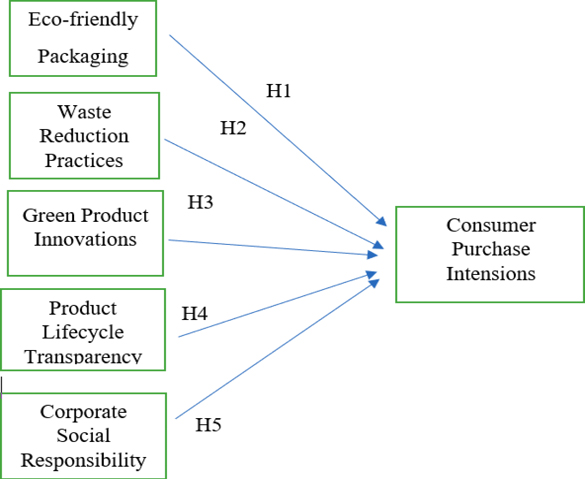
Figure 1: Components of Green Marketing (GM) that impact consumer purchasing decisions.
(Source: Developed by the researcher).
The conceptual framework of this study examines how key green marketing strategies such as eco-friendly packaging, waste reduction practices, green product innovations, product lifecycle transparency, and corporate social responsibility (CSR) influence consumer purchase intentions. These strategies are considered independent variables, whereas purchase intention is the dependent variable. Additionally, the moderating roles of environmental knowledge and green consumption habits are factored into, suggesting that consumers with a higher environmental awareness are more responsive to green marketing.
Table 1: Hypotheses Development Process
|
Independent Variable |
Hypotheses Development Process |
Sources of Construct |
|---|---|---|
|
Eco-friendly Packaging |
Businesses aim to attract customers who are more environmentally concerned by emphasising the eco-friendly features of their goods. Finding a solution can be assisted by acknowledging the threat posed by plastic pollution and implementing waste-reduction measures. A company’s dedication to protecting the environment can be demonstrated by choosing eco-friendly products and using less plastic in packaging. |
(Adi et al., 2024); (Imran & Effendee, 2024); (Lianita & Harmini, 2024) |
|
By encouraging the use of recyclable materials and minimising the use of nonbiodegradable materials, eco-friendly packaging significantly contributes to the reduction of adverse environmental effects. Regarding green packaging, this suggests that a customer may choose a product that is biodegradable or made of sustainable, recyclable, and ecologically friendly materials. |
(Bandara & Lakmali, 2022); (Diansyah & Pratminingsih, 2025); (Bhavya & Shamina, 2025) |
|
|
Waste Reduction Practices |
Consumer interest is influenced by initiatives in the food business to adopt eco-friendly packaging to achieve a zero-waste lifestyle. |
|
|
Among other stakeholders, such as governments, policymakers, and public agencies, sustainable entrepreneurs may turn to crowdfunding platforms to seek funds to reduce the amount of e-waste that ends up on Earth. |
||
|
To reduce waste and encourage circularity throughout the value chain, it places strong emphasis on strategic alliances with suppliers, waste management firms, and customers. |
||
|
Green Product Innovations |
Green innovation contributes to efforts to lessen environmental burdens by highlighted the significance of creative approaches focus on sustainability. As consumer behavior toward eco-friendly items has important implications for corporate decisions. as well as the environment and society at large, research on this topic is crucial. |
|
|
Green product innovation and overall performance are significantly affected by green transformational leadership and green entrepreneurial attitudes. Green innovation has become one of the most important strategies for encouraging customers to buy environmentally friendly products. |
||
|
Businesses looking to follow eco-friendly trends must understand how customers make decisions in this situation. |
||
|
Product Lifecycle Transparency |
Customers’ faith in a product category may be significantly impacted if even one manufacturer or brand engages in greenwashing. When it comes to lowering the uncertainty surrounding sustainable products, the roles of transparency and customer information seeking from various sources are complex. |
|
|
It is crucial to understand that these components are sophisticated socio-technical artefacts that actively shape the transparency experience and mediate its impact on customer perception, development of trust, and subsequent purchasing behaviour. |
||
|
Privacy discoveries are a common example of transparency artefacts. |
||
|
Corporate Social Responsibility |
A business that sells simple green and sustainable goods and services needs to invest in educating the public about environmental issues and how much environmental damage may be avoided with the right actions. |
|
|
Corporate social responsibility and consumer brand engagement to determine the steps necessary to create a plan for consumer-responsible brand engagement. |
||
|
Since local and international businesses have started implementing sustainable practices, corporate social responsibility (CSR) have gained attention in recent years. Negative opinions about a company’s CSR efforts can lead to brand disloyalty, and this effect can be amplified by brand perception. |
3. METHODOLOGY
3.1. Research Design and Data Collection
A quantitative research methodology was used to collect and process data in an organised manner to investigate consumer views of green marketing elements and their impact on purchase decisions. To address the need for human well-being, a company must execute fair business practices with personnel, human capital, and community. This is the focus of social sustainability. Customers who are aware of green marketing strategies and make eco-friendly purchases constitute the target population. Expert buyers carry out boundary-spanning tasks, suggesting that they play a critical role in choosing greener products and working with suppliers who respect the environment (Gelderman & Schijns, 2021). Convenience sampling was employed, focusing on readily available and consenting participants. As more companies produce and market green products, the academic community is becoming more aware of green purchasing behaviour, which is crucial to comprehend (Dangelico & Nonino, 2021). The final sample comprised 354 responses. SPSS was used to analyse the data that had been gathered.
Questionnaire Design: A structured online survey was conducted using Google Forms to collect data. The three primary sections of the questionnaire were divided. First section was Demographic data such as age, sex, income, and level of education of the respondents were recorded in this section. Consequently, the sample profile was established. The analysis’s five primary constructs–green product innovation, waste reduction strategies, eco-friendly packaging, product lifecycle transparency, and corporate social responsibility (CSR)–were measured in the second portion. Multiple items were created to reflect various aspects of consumer perception and represent each construct. For instance, questions about eco-friendly packaging asked respondents whether packaging affects their choice because it is recyclable, biodegradable, or uses less plastic. Questions concerning consumer preferences for businesses that limit extra materials or implement zero-waste policies are included in the waste reduction practices. The main topic of articles on green product innovation is whether consumers perceive new eco-friendly items as useful and practical. Consumers’ faith in brands that reveals their sourcing, production, and disposal methods was tested using lifecycle transparency questions. Perceptions of a business’s moral behaviour, just labour policies, and environmental responsibility were among CSR-related topics. Section Three: Attitudes and behaviour of consumers’ trust, loyalty, and buy intention are among the consumer outcomes covered in the last part. Enquiries have evaluated whether exposure to green marketing techniques developed favourable word-of-mouth recommendations, enhanced long-term brand loyalty, or raised the possibility of buying eco-friendly products. Although the study acknowledges that the results should be interpreted within the constraints of the sampling approach, it offers empirical data on how various green marketing strategies jointly influence customer decision making.
The measurement of specific constructs, such as eco-friendly packaging, waste reduction practices, green product innovations, product lifecycle transparency, corporate social responsibility (CSR), and environmental awareness was the main focus of this section on green marketing components. Respondents were asked to score their degree of agreement using a 5-point Likert scale, with 5 representing strongly disagree and 1 representing strongly agree. Data were collected both online and offline. Data were collected 15th January to 27 February 2025.
4. DATA ANALYSIS AND DISCUSSION
4.1. Demographic Factor Analysis
As they provide a coherent description of the data, descriptive statistics were crucial for this study. This Table 2 contains several types of data. Descriptive statistics offer clues about the analysis, but do not permit a conclusion.
Table 2: Demographic Profile of the Respondents
|
Aspects |
Classification |
Frequency |
Percentage (%) |
|---|---|---|---|
|
Age |
18-25 years |
176 |
49.7 |
|
26-35 years |
127 |
35.9 |
|
|
36-45 years |
34 |
9.6 |
|
|
45 and above |
17 |
4.8 |
|
|
Gender |
Male |
178 |
50.3 |
|
Female |
175 |
49.4 |
|
|
Prefer not to say |
1 |
0.3 |
|
|
Other |
0 |
0 |
|
|
Education |
High School |
1 |
0.3 |
|
College |
24 |
6.8 |
|
|
Undergraduate |
176 |
49.7 |
|
|
Graduate |
109 |
30.8 |
|
|
Postgraduate |
37 |
10.5 |
|
|
Other |
7 |
2.0 |
|
|
Income |
Below 5000 |
104 |
29.4 |
|
5000-10,000 |
44 |
12.4 |
|
|
11,000-20,000 |
97 |
27.4 |
|
|
21,000-50,000 |
83 |
23.4 |
|
|
Above 50,000 |
26 |
7.3 |
|
|
Total |
354 |
100 |
The age distribution of the respondents clearly shows a predominant emphasis on the younger category (Table 2). The age gap between 18 and 25 years represented 49.7 % of the participants, the largest number among the samples. Digital natives, or GEN Z, are those born after 1995 and have a strong interest in technology. GEN Z is concerned with pollution control, environmental issues, and environmental protection. Additionally, it has come to light that environmental concerns promote sustainable consumption. GEN Z has now joined the workforce and has become an active consumer. The Sustainable Development Goals for 2030 and 2050 will therefore directly target Generation Z. Determining the push and pull factors and analysing GEN Z’s purchasing patterns are crucial (Baltaci et al., 2024). The 26-35-year category comes next, with 35.9 %. These two categories are the largest categories accounted for the majority of the total sample (85.6 %), implying that this study mainly covers young adults. The respondents were divided almost evenly between males and females in terms of their gender distribution. Of the 354 respondents, 50.3 % were male and 49.4 % were female; only 0.3 % preferred not to reveal their gender. Nearly half (49.7 %) of the 354 respondents had completed a bachelor´s program, leading to an increase in its prevalence as an educational level in the study’s respondents. The graduates comprised 30.8 % of those with postgraduate degrees (10.5 %). The responses from 354 respondents had a wide range of monthly incomes.
4.2. Factor Analysis
To verify the extent of connectivity between the questionnaires and the respondents, we conducted a Factor Analysis. This statistical technique assists us in obtaining more reliable and detailed information from respondents, while simultaneously dealing with other problematic overlaps. It further purges ambiguous items; hence, more precise data emerge after the factor analysis. Had we not conducted factor analysis, it is possible that the study would have been dubious and devoid of clarity. During Factor Analysis, we used the Kaiser- Meyer Olkin Measure of Sampling Adequacy and Bartlett’s sphericity test (KMO and Bartlett’s test).
Table 3: KMO and Bartlett’s Test
|
KMO and Bartlett’s Test |
||
|---|---|---|
|
Kaiser-Meyer-Olkin Measure of Sampling Adequacy. |
.951 |
|
|
Bartlett’s Test of Sphericity |
Approx. Chi-Square |
4541.038 |
|
df |
78 |
|
|
Sig. |
.000 |
|
The value for Kaiser-Meyer-Olkin (KMO) measure of sampling adequacy is 0.951, which is excellent and shows that the sample size is adequate for factor analysis. A KMO value above 0.9, it was considered excellent, indicating that the structure of the data was suitable for analysis.
Bartlett’s Test of Sphericity yielded an approximate chi-square value (0.000 at p < 0.05) indicated that the correlation between the variables was strong during the factor analysis process. A significant finding (p < 0.05) confirms the existence of structured relationships in the data suitable for dimensional reduction.
|
Communalities |
||
|---|---|---|
|
Initial |
Extraction |
|
|
Eco_Packaging_3 |
1.000 |
.875 |
|
Eco_Packaging_4 |
1.000 |
.864 |
|
Waste_Reduction_1 |
1.000 |
.926 |
|
Waste_reduction_2 |
1.000 |
.828 |
|
Green_Product_1 |
1.000 |
.902 |
|
Green_Product_2 |
1.000 |
.890 |
|
Product_Lifecycle_1 |
1.000 |
.864 |
|
Product_Lifecycle_2 |
1.000 |
.873 |
|
Product_Lifecycle_3 |
1.000 |
.893 |
|
Product_Lifecycle_4 |
1.000 |
.859 |
|
Social_Responsibility_2 |
1.000 |
.816 |
|
Social_Responsibility_3 |
1.000 |
.883 |
|
Social_Responsibility_4 |
1.000 |
.851 |
|
Extraction Method: Principal Component Analysis. |
||
The PCA-extracted factors (Table 4) showed considerable variance for each variable. All variables had high communalities, with values varying between 0.816 and 0.926, indicating that these factors explained the largest part of their variance. For example, Waste_Reduction_1 had a communality of 0.926, implying that the extracted factors captured 92.6 % of the variance. Similarly, variables like Green_Product_1 have relatively respectable communalities (0.902) while Product_Lifecycle_3 works well with components because 0.893.” In general, this implies a good fit between our observed dataset and our model which implies that the extraction is useful for future analysis.
Table 5: Total Variance Explained
|
Total Variance Explained |
|||||||||
|---|---|---|---|---|---|---|---|---|---|
|
Component |
Initial Eigenvalues |
Extraction Sums of Squared Loadings |
Rotation Sums of Squared Loadings |
||||||
|
Total |
% of Variance |
Cumulative % |
Total |
% of Variance |
Cumulative % |
Total |
% of Variance |
Cumulative % |
|
|
1 |
9.073 |
69.789 |
69.789 |
9.073 |
69.789 |
69.789 |
3.172 |
24.400 |
24.400 |
|
2 |
.791 |
6.087 |
75.876 |
.791 |
6.087 |
75.876 |
2.605 |
20.039 |
44.438 |
|
3 |
.590 |
4.541 |
80.418 |
.590 |
4.541 |
80.418 |
2.028 |
15.600 |
60.038 |
|
4 |
.487 |
3.749 |
84.166 |
.487 |
3.749 |
84.166 |
1.879 |
14.456 |
74.494 |
|
5 |
.384 |
2.950 |
87.116 |
.384 |
2.950 |
87.116 |
1.641 |
12.622 |
87.116 |
|
Extraction Method: Principal Component Analysis. |
|||||||||
Table 5, which explains the total variance, shows how much of the variance in the dataset is accounted for by each component. Initially, the first component explained 69.79 % of the variance, which was a significant portion. After extraction and rotation, variance was redistributed across the five components to provide a clearer and more interpretable structure. The first component after rotation explained 24.40 % of the variance, followed by the second (20.04 %), third (15.60 %), fourth (14.46 %), and fifth (12.62 %) components. Together, these five components accounted for 87.12 % of the total variance, indicating that they collectively captured most of the dataset information and were useful for further analysis. The rotation spreads the explained variance more evenly across the components to improve interpretability. Principal component analysis was used to complete the factor analysis with a small coefficient suppression value of 0.60. The varimax rotation method was used to identify research components. For further regression analysis total 5 components were identified and few variables were removing such as Eco_Packaging1 and 2, Waste_Reduction3 and 4, Green_Product 3 and 4 and Social_Responsibility_1. The relative significance of each predictor is shown by beta coefficients. Corporate social responsibility and environmentally friendly packaging have greater beta values, indicating that they have the greatest impact on customer purchase decisions. On the other hand, although statistically significant, waste reduction strategies and product lifecycle transparency showed somewhat lower beta values, indicating a more supportive than direct impact on purchase intention. Innovation in green products also has a significant effect, improving consumer perceptions of environmentally friendly goods.
Table 6: Rotated Component Matrix
|
Rotated Component Matrixa |
|||||
|---|---|---|---|---|---|
|
Component |
|||||
|
1 |
2 |
3 |
4 |
5 |
|
|
Eco_Packaging_3 |
.810 |
||||
|
Eco_Packaging_4 |
.797 |
||||
|
Waste_Reduction_1 |
.838 |
||||
|
Waste_reduction_2 |
.662 |
||||
|
Green_Product_1 |
.698 |
||||
|
Green_Product_2 |
.683 |
||||
|
Product_Lifecycle_1 |
.726 |
||||
|
Product_Lifecycle_2 |
.739 |
||||
|
Product_Lifecycle_3 |
.748 |
||||
|
Product_Lifecycle_4 |
.706 |
||||
|
Social_Responsibility_2 |
.678 |
||||
|
Social_Responsibility_3 |
.753 |
||||
|
Social_Responsibility_4 |
.749 |
||||
|
Extraction Method: Principal Component Analysis. Rotation Method: Varimax with Kaiser normalisation. |
|||||
|
a) The rotation converges over six iterations. |
|||||
The Rotated Component Matrix (Table 6) resulting from principal component analysis (PCA) revealed the structural relationships among the variables related to environmental sustainability practices. Component 1 is primarily characterised by high loadings from the Product Lifecycle variables, with values ranging from 0.706 to 0.748, indicating a strong association with product lifecycle transparency. Component 2 captures the essence of Corporate Social Responsibility, as evidenced by loadings between 0.678 and 0.753 for the related variables, suggesting that a company’s social initiatives significantly influence consumer preferences. Component 3 was dedicated to Eco-friendly Packaging, with substantial loadings of 0.810 and 0.797 for the packaging variables, highlighting the importance of sustainable packaging in purchasing decisions. Component 4 focused on Waste Reduction, with Waste Reduction 1 loading at 0.838 and Waste Reduction 2 loading at 0.662, underscoring the relevance of waste management strategies in consumer choice. Finally, Component 5 encapsulates Green Product Innovations, as demonstrated by the loadings of 0.698 and 0.683 for the respective green product variables. Overall, the analysis effectively delineates five distinct components, each representing key themes that align with the research hypotheses regarding environmental sustainability and consumer behaviour.
4.3: Regression Analysis
Regression analysis is a statistical method used to estimate relationships between various variables. We determine its effect on the average dependent variable by adjusting for one of the independent variables. Numerous techniques are available for modelling and analysing multiple datasets. Our example is based on linear regression, in which we conducted a statistical investigation during the research period. The regression analysis provides insights into the relationship between the five factors (eco-friendly packaging, waste reduction practices, green product innovations, product lifecycle transparency, and Corporate Social Responsibility) and the dependent variable, Consumer Purchase Intentions. The following is a detailed interpretation of the results.
Table 7: Variables Entered/Removed
|
Variables Entered/Removeda |
|||
|---|---|---|---|
|
Model |
Variables Entered |
Variables Removed |
Method |
|
1 |
Social_Responsibility, Waste_Reduction, Eco_Packaging, Product_Lifecycle, Green_Product_Innovationb |
. |
Enter |
|
a) Dependent Variable: Consumer_Purchase_Intensions |
|||
|
b) All the requested variables were entered. |
|||
|
Model Summary |
||||
|---|---|---|---|---|
|
Model |
R |
R Square |
Adjusted R Square |
Std. Error of the Estimate |
|
1 |
.994a |
.988 |
.987 |
.05528 |
|
a) Predictors: (Constant), REGR factor score 5 for analysis 1, REGR factor score 2 for analysis 1, REGR factor score 1 for analysis 1, REGR factor score 4 for analysis 1, REGR factor score 3 for analysis 1 |
||||
The model’s R Square value of 0.988 (Table 8) indicates that eco-friendly packaging, waste reduction strategies, corporate social responsibility, product lifecycle transparency, and green product innovation account for approximately 98.8 % of the variation in consumer purchase intentions. This remarkably strong explanatory power highlights how the integration of several green marketing methods significantly influences customer behaviour and demonstrates the robustness of the model. The model’s stability and dependability are further supported by the adjusted R2 value of 0.987, which indicates that the predictors continue to be very successful in describing customer intentions, even after taking possible overfitting into consideration. These results emphasise the importance of using a holistic strategy for green marketing, as every element works together to influence consumers to make environmentally conscious purchases.
4.4. Model Summary
R = 0.994 indicates a strong correlation between the independent variables (five factors) and consumer purchase intention.
R Square = 0.988 shows that 98.8 % of the variation in consumer purchase intentions is explained by the five factors in the model. This implied a nearly perfect fit.
Adjusted R Square = 0.987 is close to R Square, confirming that the model is robust even when adjusted for the number of predictors. The Standard Error of the Estimate was low (0.05528), which indicated that the model predictions were accurate.
|
ANOVAa |
||||||
|---|---|---|---|---|---|---|
|
Model |
Sum of Squares |
df |
Mean Square |
F |
Sig. |
|
|
1 |
Regression |
83.661 |
5 |
16.732 |
5476.237 |
.000b |
|
Residual |
1.054 |
345 |
.003 |
|||
|
Total |
84.715 |
350 |
||||
|
a) Dependent Variable: Consumer_Purchase_Intensions |
||||||
|
b) Predictors: (Constant), Social_Responsibility, Waste_Reduction, Eco_Packaging, Product_Lifecycle, Green_Product_Innovation |
||||||
ANOVA (Table 9) provides a comprehensive analysis of the regression model used to predict consumer purchase intentions based on various factors related to eco-friendly practices. The table indicates that the regression model is statistically significant, as evidenced by the F-statistic of 5476.237, accompanied by a p-value of less than 0.001. This finding suggests a strong likelihood that the independent variables collectively explain a significant portion of the variability of the dependent variable. The “Sum of Squares” for the regression is 83.661, indicating the amount of variation explained by the model, while the residual sum of squares is 1.054, which reflects the variation not accounted for by the model. The degrees of freedom (df) for the regression were five, corresponding to the number of predictors included in the model, whereas the residual degrees of freedom were 345, indicating a substantial sample size. The mean square values (16.732 for regression and 0.003 for residual) further illustrate the overall efficiency of the model in explaining consumer purchase intentions. Overall, the ANOVA results confirm that the model is robust, and that the independent variables are effective predictors of the dependent variable.
Table 10: Coefficients
|
Coefficientsa |
||||||
|---|---|---|---|---|---|---|
|
Model |
Variables |
Statistics |
||||
|
Unstandardized Coefficients |
Standardized Coefficients |
t |
Sig. |
|||
|
B |
Std. Error |
Beta |
||||
|
1 |
(Constant) |
4.117 |
0.003 |
1395.524 |
0 |
|
|
Eco_Packaging |
0.263 |
0.003 |
0.535 |
89.071 |
0 |
|
|
Waste_Reduction |
0.231 |
0.003 |
0.47 |
78.31 |
0 |
|
|
Green_Product_Innovation |
0.209 |
0.003 |
0.426 |
70.904 |
0 |
|
|
Product_Lifecycle |
0.194 |
0.003 |
0.396 |
65.861 |
0 |
|
|
Social_Responsibility |
0.185 |
0.003 |
0.377 |
62.841 |
0 |
|
|
a) Dependent Variable: Consumer_Purchase_Intensions |
||||||
4.5. Coefficients Interpretation
The coefficients indicate the extent to which each factor contributes to the prediction of consumers’ purchase intentions. All the factors had significant t-values (p < 0.001), suggesting that each factor had a strong impact.
1. Eco-friendly Packaging
B = 0.263, Beta = 0.535
This is the most significant predictor with the highest beta value, indicating that eco-friendly packaging has the strongest positive impact on consumers’ purchase intentions. This supports H1, confirming that environmentally friendly packaging significantly influences consumers’ decisions.
2. Waste Reduction Practices
B = 0.231, Beta = 0.470
Waste reduction practices also strongly affected purchase intentions, although they were slightly less effective than eco-friendly packaging. This supports H2, which indicates that customers are more inclined to purchase the predicted consumer waste.
3. Green Product Innovations
B = 0.209, Beta = 0.426
Green product innovations positively impact consumer decisions, but to a lesser extent than the first two factors. This finding supports H3, suggesting that innovative green products attract environmentally conscious consumers.
4. Product life cycle transparency
B = 0.194, Beta = 0.396
Product life-cycle transparency has a moderate positive influence on purchase intention, confirming H4. Consumers prefer products that provide clear information about their environmental impact.
5. Corporate Social Responsibility:
B = 0.185, Beta = 0.377
Corporate social responsibility has the smallest yet significant impact on consumer decisions, supporting H5. Companies with strong CSR initiatives appeal to eco-aware customers.
Based on the regression analysis, we interpret each hypothesis as follows.
H1: Eco-friendly Packaging
Hypothesis: Consumer purchase decisions are positively affected by environment-friendly packaging.
Interpretation: The results show a significant positive relationship between eco-friendly packaging and consumer purchase intention. With a Beta of 0.535, it has the strongest impact among all the factors, confirming that consumers are highly influenced by eco-friendly packaging when making purchase decisions. Therefore, H1 is supported.
H2: Waste Reduction Practices
Hypothesis: Customers are more inclined to purchase goods from businesses that actively reduce waste.
Interpretation: The coefficient for waste reduction practices is also significant, with a beta of 0.470, indicating that it strongly influences consumers’ purchasing decisions. This confirms that consumers prefer businesses that adopt waste-reduction measures. Thus, H2 is supported.
H3: Green Product Innovations
Hypothesis: Consumers who care about the environment are more likely to be drawn toward innovative green products.
Interpretation: Green product innovation has a positive impact on consumer purchase intention with a beta of 0.426. Although it is not the most significant predictor, it still has a strong influence, suggesting that eco-conscious consumers are attracted to innovative green products. Therefore, H3 is supported.
H4: Product Lifecycle Transparency
Hypothesis: Consumers prefer products with comprehensive information regarding their lifetime environmental impact.
Interpretation: A Beta of 0.396 indicates that product life cycle transparency has a moderate yet significant effect on purchase intention. Consumers value transparency regarding a product’s environmental impact, thus supporting H4.
H5: Corporate Social Responsibility
Hypothesis: Businesses with strong corporate social responsibility initiatives tend to attract more eco-aware customers.
Interpretation: Corporate social responsibility initiatives also positively affect consumer purchase intentions, with a Beta of 0.377. Although it had the smallest impact compared to the other factors, it still played a significant role. Therefore, H5 is supported.
5. DISCUSSION:
Table 11: Tabular Summary of Hypothesis
|
Hypothesis |
Hypothesis Statement |
Beta Coefficient |
Significance (p- value) |
Support |
|---|---|---|---|---|
|
H1: Eco-friendly Packaging |
Consumer purchase decisions are positively affected by environmentally friendly packaging |
0.535 |
0.000 |
Supported |
|
H2: Waste Reduction Practices |
Customers are more inclined to purchase goods from businesses that actively reduce waste. |
0.470 |
0.000 |
Supported |
|
H3: Green Product Innovations |
Consumers who care about the environment are more likely to be drawn toward innovative green products. |
0.426 |
0.000 |
Supported |
|
H4: Product Lifecycle Transparency |
Consumers prefer products with comprehensive information regarding their lifetime environmental impact. |
0.396 |
0.000 |
Supported |
|
H5: Corporate Social Responsibility |
Businesses with strong corporate social responsibility initiatives tend to attract more eco-aware customers. |
0.377 |
0.000 |
Supported |
The regression analysis validates all five hypotheses, indicating that consumer purchasing decisions are significantly impacted by eco-friendly packaging, green product innovations, product lifecycle transparency, waste reduction practices, and corporate social responsibility.
Figure 2: Green Marketing Components Framework.
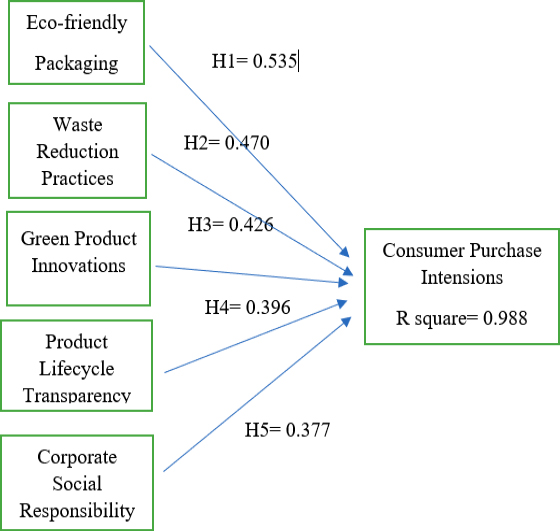
Both male and female 354 respondents were interested in the green marketing concept and provided the data for this study. Marketing involves more than just advertising and sales. It encompasses a wide range of additional duties including product development, manufacturing, packaging, promotion, and distribution. Similarly, the broad field of green marketing encompasses product design and redesign, green manufacturing, integrated marketing communication, and other marketing strategies (Saleem et al., 2021).
Consumers understand Green Marketing (GM) and green purchasing (GP). They agree to pay more for green products (Khayru et al. 2021). In the last few decades, environmental preservation and related issues have presented significant difficulties for civilisation. These concerns, which impact consumers’ decisions to purchase products either directly or indirectly, include global warming and depletion of natural resources (Correia & Sousa, 2023). Among respondents, 55.6 % agreed to pay more for eco-friendly products. The findings of the current study showed a positive correlation between green purchasing intention and all described constructs, including eco-friendliness, waste reduction, green product innovation, product lifecycle transparency, and corporate social responsibilities. All hypotheses were supported by this study. Customer perceptions of the environment act as mediators of the interaction between eco-labelling and green buying intentions.
Liu et al. (2024) mentioned, the main goal of the current study is to examine how GSCM procedures offer empirical insights to the developing fields of EP, GI, and zero waste management. Modern businesses work to attain zero waste and GI by implementing corporate-level procedures that support social, economic, and environmental goals. This study highlights environmentally friendly actions as a crucial component of the decision-making process and presents an original approach to zero waste practices. Another author (Chakravarty & Prasad, 2025) said that, with an emphasis on how green packaging contributes to environmental sustainability, this study examines the new trends, difficulties, and possibilities related to this practice. Green packaging includes biodegradable, recyclable, reusable materials, and creative designs that reduce environmental effects across product life cycles. Adopting such techniques is not without difficulty, even though it offers encouraging opportunities to cut waste, preserve resources, and improve brand reputation. High production costs, low consumer awareness, regulatory obstacles, and supply chain complexity are some of the challenges businesses must overcome. In another study (Maaroof & Dedeoğlu, 2025), all aspects of green marketing, removing the idea of waste, reusing the product concept, elucidating the relationship between the product price and cost, and making environmental orientation profitable, have a positive correlation and influence. The results of this study are consistent with earlier research on specific facets of green marketing, and it is crucial to remember that no recent study has fully addressed every element that was examined in the present investigation. This distinguishes the current study because it combines these disparate but related elements to offer a more thorough comprehension of their combined influence on environmentally conscious consumer behaviour.
In other words, we contend that consumers’ environmental attitudes enable businesses to employ eco-labelling to boost green purchases (Majeed & Aslam, 2022). The findings show that business and consumer behaviour researchers are becoming more interested in analysing green marketing strategies. This underscores the significance of the societal challenges of climate change, environmental protection, and resource conservation (Wandosell & Parra-Meroño, 2021). Time-series statistics illustrating each market’s performance are required to examine the connections between the global green bond market and several important traditional financial and energy sectors (Ferrer & Shahzad, 2021). The growth of the manufacturing sector is acknowledged as having the potential to create value because it encourages the creation of new job possibilities, which enables swift and extensive improvement in quality of life (Appolloni & Jabbour, 2022).
6. PRACTICAL AND MANAGERIAL IMPLICATIONS
This study makes significant contributions to both the theoretical understanding and practical application of green marketing. From a “theoretical perspective”, it enhances the comprehension of how green marketing elements such as eco-friendly packaging, waste reduction practices, green product innovations, and corporate social responsibility (CSR) influence consumer purchasing behaviour. This study supports the existing literature, which highlights the growing importance of environmental concerns in shaping consumer choices (Nguyen-Viet, 2022). These findings resonate with those of Riskos & Dekoulou (2021), who emphasised that modern consumers are increasingly driven by their environmental consciousness, leading to a preference for eco-friendly products. This study further reinforces the role of green marketing as a pivotal factor in sustainable consumerism, and adds nuance to the understanding of how specific green strategies appeal to different consumer segments.
From a “managerial standpoint”, the study provides actionable insights for businesses looking to integrate sustainability into their marketing strategies. First, companies are encouraged to prioritise “eco-friendly packaging” because it has been shown to positively impact consumer purchasing decisions (Tan & Sadiq, 2022). This aligns with previous studies that suggest that environmentally conscious consumers prefer products with minimal or recyclable packaging. Businesses that invest in packaging appeal to consumers and gain a competitive edge. Second, adopting ‘waste reduction practices is critical. As noted by Majeed & Aslam (2022), businesses that actively reduce waste throughout their supply chains are more likely to attract eco-conscious consumers, while also achieving cost savings and improving operational efficiency.
“Green product innovations” are also essential for maintaining a competitive advantage. Companies should consistently innovate by introducing sustainable products that have been shown to attract environmentally aware consumers and enhance brand loyalty (Khanra et al., 2022). By leveraging sustainable materials and technologies, businesses can differentiate themselves within an increasingly saturated market. Lastly, companies must emphasise their commitment to “CSR initiatives”. García-Salirrosas & Rondon-Eusebio, 2022 highlighted that robust CSR initiatives focusing on environmental protection can enhance brand reputation and consumer trust, further solidifying long-term relationships with eco-conscious customers.
The managerial implications of this study suggest that businesses aligning their operations with green marketing strategies stand to gain not only consumer loyalty but also stronger market presence. By embracing eco-friendly practices, companies can position themselves as sustainable leaders, thereby meeting growing demand for environmentally responsible products and services. These green marketing techniques can be used by company managers to achieve long-term environmental and financial objectives. Additionally, public and private banks may offer subsidised loans to the nation’s green branding companies, and the government may offer incentives such as a reduced cooperative tax on green product sectors (Zhang & Sami, 2024).
7. CONCLUSION
This study investigated the ways in which various facets of green marketing influence customers’ purchasing decisions. Based on the responses of the 354 participants, this study illuminates the role of green marketing strategies in influencing customer preferences and behaviour. The results showed that eco-friendly packaging, waste reduction practices, green product innovations, product lifecycle transparency, and corporate social responsibility (CSR) are green marketing elements that have a significant impact on consumers’ intent to make purchases. The most significant characteristics are eco-labels and environmental awareness, implying that buyers are becoming increasingly aware of how their purchases affect the environment. Green marketing emphasises actions to preserve survival through environmental preservation and avoidance of consumptive practices that contribute to environmental harm, in addition to global warming.
Although the outlook is encouraging, this study highlights certain limitations. The long-term success of green marketing campaigns may depend on establishing openness and credibility as some consumers continue to doubt the veracity of green claims. Since these are the evaluation standards that consumers use to weigh their options, product features serve as both qualifiers of products and determinants of product purchases in marketing and consumer behaviour studies (Marcon & Ribeiro, 2022).
Marketers should concentrate on informing customers about environmentally friendly policies, ensuring that their supply chains are transparent, and using reliable and understandable eco-labels to convey the environmental advantages of their products. Businesses must acknowledge that their suppliers’ marketing campaigns can influence them. Experienced purchasers may believe that they are in a position to “manage suppliers” and “develop suppliers” (Gelderman & Schijns, 2021). In summary, this study shows that when done right and openly, customer purchasing behaviour can be greatly influenced by the green marketing strategies used by businesses. As environmental concerns continue to grow, businesses must prioritise sustainability to suit the evolving needs of modern consumers and benefit society positively.
However, customers’ appreciation of green initiatives, pricing, and product performance continue to influence their purchase decisions. This implies that green marketing tactics work best when combined with competitive pricing and an unwavering quality. Overall, the findings show that when combined, green marketing elements offer a potent framework for influencing consumer behaviour by fusing short-term purchase incentives with long-term trust and loyalty motives. Practically speaking, these results have important ramifications for companies. In addition to continuing to engage in product innovation and open communication throughout the product lifecycle, companies looking to boost sales and foster customer loyalty should prioritise sustainable packaging options and obvious CSR actions. Long-term client connections and brand trust can be further strengthened by waste reduction tactics, certifications, and clear labelling.
7.1. Scope of Future Study
The current investigation offers prospects for additional research, even though it offers valuable insights into the connection between green marketing elements and customer behaviour. Although sufficient for quantitative analysis, the sample size of 354 respondents used in this study restricts the extent to which the findings can be applied. By gathering information from larger and more varied samples, future studies could overcome this constraint and enable a higher statistical power and wider applicability of the results. Furthermore, this study only used quantitative methods; to learn more about customer attitudes, motivations, and perceptions of green marketing strategies, future research could use mixed methods or qualitative approaches. Future researchers could also conduct surveys from companies.
Another crucial avenue for future research is geographical expansion. Although the current study focuses on a particular country, developing economies such as Vietnam, India, Nepal, the Philippines, and Bhutan also face sustainability difficulties and rising environmental consumer awareness. Cross-national or comparative studies in these areas will improve our knowledge of how social, cultural, and economic variations affect the success of green marketing campaigns. Future researchers can offer a more thorough understanding of how green marketing strategies influence customer behaviour in various circumstances by broadening the scope of these ways.
7.2. Limitation of the Study
Despite its contributions, the research presented here has limitations. First, the study only included 354 respondents, which is a small sample size that limits the applicability of the findings to larger populations. The results might have been more reliable with a larger and more varied sample size. Second, there may have been a sampling bias because the data were only gathered online, which might have omitted people without Internet access or those who were less accustomed to using digital platforms. Third, this study used a cross-sectional design to record the attitudes and actions of consumers at a particular moment in time. This makes it difficult to track how attitudes and buying patterns evolve over time. Fourth, because the study was limited to a single country, cultural, economic, and social differences in other nations were not considered. Finally, this study used only quantitative techniques. Although the statistical analysis yielded quantifiable insights, it was unable to capture the more profound motives, perceptions, or feelings that qualitative approaches might disclose.
Acknowledgements
This study has no acknowledgements.
Conflict of Interest
The authors declare no conflict of interest.
Data Availability Statement
The data will be made available upon request.
Funding Statement
This study received no funding, grants, or other financial support from any party.
Statement of Authorship Contribution:
1.Dr. Salma Akter: conceptualization of the study including data curation, formal editing and evaluation, methodology design, visualization, draft writing.
2.Farha Tabassum: Conducting expert interviews, structured Questionnaire design, data organizing, literature review writing, investigation, original draft writing.
3.Taj Ashrafi: Analysis, project management, resources, supervision.
4.Fahim Ahmed: Reference section, Data Collection
5.S.M. Midhatul Islam Arabi: Data Collection, revision.
REFERENCES
., & . (2024). Towards circular fashion: Management strategies promoting circular behaviour along the value chain. Sustainable Production and Consumption, 48(1), 143-156. https://doi.org/10.1016/j.spc.2024.05.010
., ., ., ., & . (2024). The influence of enviromental awareness and green marketing on purchasing decisions for eco-friendly products through environmental knowledge of eco-friendly packaging. RJOAS: Russian Journal of Agricultural and Socio-Economic Sciences, 150(6), 36-37.
., & . (2020). The awareness of environmentally friendly products: The impact of green advertising and green brand image. The Awareness of Environment, 10(9), 1961-1968. 10.5267/j.msl.2020.2.017
., & . (2023). Green Marketing in the Digital Age: A Systematic Literature Review. Sustainability, 15(16), 2-18. https://doi.org/10.3390/su151612369
., & . (2023). Green Marketing Perspective: Enhancing Green Customer Loyalty with Environmental Knowledge as a Moderating Factor in the Local Cosmetic Industry in Indonesia. Review of Integrative Business and Economics Research, 13(4), 148-160.
., & . (2022). Green recovery in the mature manufacturing industry: The role of the green-circular premium and sustainability certification in innovative efforts. Ecological Economics, 193(1), 122-145. https://doi.org/10.1016/j.ecolecon.2021.107311
., & . (2024). Green entrepreneurial leadership, and performance ofentrepreneurial firms: does green product innovation mediates. Cogent Business and Management, 11(1). 10.1080/23311975.2024.2355685
., & . (2022). Green Marketing Approaches and Their Impact on Green Purchase Intentions: Mediating Role of Green Brand Image and Consumer Beliefs towards the Environment. Sustainability, 14(18), 2-18. https://doi.org/10.3390/su141811703
., & . (2022). Impact of Visual and Verbal Elements of Eco-Friendly Packaging on Consumer Buying Behavior. Journal of Dry Zone Agriculture, 8(1), 38-58. DOI: 10.4038/jdza.v8i1.54
., & . (2024). Green Marketing and its Impact on Consumer Buying Behavior in Kathmandu Valley. Quest Journal of Management and Social Sciences, 6(1), 2-7. https://doi.org/10.3126/qjmss.v6i1.67380
., ., & . (2024). The relationships between the multidimensional planned behavior model, green brand awareness, green marketing activities, and purchase intention. Sensory Neuroscience, 14(6). https://doi.org/10.1002/brb3.3584
., & . (2025). Role of Environmental Consciousness in Influencing Consumer Purchase Decisions towards Green Packaging: An Empirical and Theoretical Exploration. Revista Latinoamericana de la Papa, 398-400. https://papaslatinas.org
., & . (2025). Green Packaging and Environmental Sustainability: Emerging Trends, Challenges, and Opportunities. In book: Transformative Research Trends in Multidisciplinary ContextsPublisher: JK Publishers.94-101
. (2024). Utilizing a Hybrid Approach to Identify the Importance of Factors That Influence Consumer Decision-Making Behavior in Purchasing Sustainable Products. Sustanability, 16(11). https://doi.org/10.3390/su16114432
., & . (2021). The Green Competitiveness of Enterprises: Justifying the Quality Criteria of Digital Marketing Communication Channels. Sustainability, 13(24). 2-19. https://doi.org/10.3390/su132413679
., ., ., & . (2020). The Influence of Green Brand Affect on Green Purchase Intentions: The Mediation Effects of Green Brand Associations and Green Brand Attitude. International Journal of Environmental Research and Public Health, 17(11). https://doi.org/10.3390/ijerph17114089
., & . (2020). Identifying the critical factors of customer behavior: An integration perspective of marketing strategy and components of attitudes. Journal of Retailing and Consumer Services, 55(1), 50-62. https://doi.org/10.1016/j.jretconser.2020.102113
., & . (2023). Analysing the Influence of Green Marketing Communication in Consumers’ Green Purchase Behaviour. Environmental Sustainability: Knowledge, Attitudes and Behavior, 20(2), 1-17. https://doi.org/10.3390/ijerph20021356
., & . (2024). The impact of corporate social responsibility on consumer brand engagement and purchase intention at fashion retailers. Phichology and Marketing, 41(3), 649-664. https://doi.org/10.1002/mar.21940
., & . (2024). Consumers’ purchase behavior of Cradle to Cradle Certified products-The role of trust and supply chain transparency. Business Strategy and the Environment, 33(8), 8280-8299. https://doi.org/10.1002/bse.3919
., & . (2021). Which are the determinants of green purchase behaviour? A study of Italian consumers. Business Strategy and the Environment, 30(5), 2600-2620. https://doi.org/10.1002/bse.2766
., & . (2025). A Design Theory for Transparency of Information Privacy Practices. Information Systems Research, 35(3), 1-23. https://doi.org/10.1287/isre.2019.0239
., & . (2023). Green marketing and corporate social responsibility: A review of business practices. Multidisciplinary Reviews, 7(3), 2-15. 10.31893/multirev.2024059
., & . (2025). The Effect of Eco-Friendly Packaging, Green Brand Image on Purchasing Decisions on MSME Product in West Bandung Regency. International Journal of Economices, Management and Accounting, 3(3), 243-251. 10.47353/ijema.v3i3.330
., & . (2020). Understanding Guests’ Intention to Visit Green Hotels. Journal of Hospitality & Tourism Research, 45(3), 58-68. https://doi.org/10.1177/1096348020947800
., ., & . (2025). Green Innovations and Consumer Purchase Behavior: A Systematic Literature Review. Journal of Business Management and Accounting, 9(1), 19–30. Retrieved from https://journal.lifescifi.com/index.php/art/article/view/642
., & . (2021). Are green bonds a different asset class? Evidence from time-frequency connectedness analysis. Journal of Cleaner Production, 292(10), 148-163. https://doi.org/10.1016/j.jclepro.2021.125988
., & . (2022). Green Marketing Practices Related to Key Variables of Consumer Purchasing Behavior. Systematic Review, 14(14), 2-19. https://doi.org/10.3390/su14148499
., & . (2021). Green marketing as an environmental practice: The impact on green satisfaction and green loyalty in a business-to-business context. Business Strategy and the Environment, 30(4), 2061-2076. https://doi.org/10.1002/bse.2732s
., & . (2020). Green Technology and Sustainable Development: Assessment and Green Growth Frameworks. Social and New Technology Challenges of Sustainable Business, 12(16), 2-13. https://doi.org/10.3390/su12166571
., & . (2024). The Influence of Environmentally Friendly Packaging on Consumer Interest in Implementing Zero Waste in the Food Industry to Meet Sustainable Development Goals (SDGs) Need. Asean Journal of Economic and Economic Education 3(2). Retrieved from https://ejournal.bumipublikasinusantara.id/index.php/ajeee/article/view/443
., &. (2025). Towards sustainable consumption decision-making: Examining the interplay of blockchain transparency and information-seeking in reducing product uncertainty. Decision Support Systems, 189(1). https://doi.org/10.1016/j.dss.2024.114370
., & . (2024). The Effect of Eco-Friendly Packaging on Consumer Purchase Intention: A Study of Beverage Sustainable Packaging Practices. Journal of Community Development in Asia (JCDA) 7(1), 91-104. https://doi.org/10.32535/jcda.v7i1/2539
., & . (2022). The importance of product lifetime labelling for purchase decisions: Strategic implications for corporate sustainability based on a conjoint analysis in Germany. Business Strategy and the Environment, 31(4), 1275-1291. https://doi.org/10.1002/bse.2954
., & . (2022). Green marketing innovation and sustainable consumption: A bibliometric analysis. Journal of Cleaner Production, 361(1). https://doi.org/10.1016/j.jclepro.2022.132290
., & . (2022). Green Marketing Strategies, Environmental Attitude, and Green Buying Intention: A Multi-Group Analysis in an Emerging Economy Context. Sustainability, 14(10), 2-19. https://doi.org/10.3390/su14106107
., & . (2020). Determinants of pro-environmental behavior and environmentally conscious consumer behavior: An empirical investigation from emerging market. Business Strategy & Development, 3(1), 112-127. https://doi.org/10.1002/bsd2.82
., & . (2021). Past, present, and future of green product innovation. Business Strategy and the Environment, 30(8), 4081-4106. https://doi.org/10.1002/bse.2858
., & . (2022). A resource-based view of green innovation as a strategic firm resource: Present status and future directions. Business Strategy and the Environment, 31(4), 1395-1413. https://doi.org/10.1002/bse.2961
. . & . (2021). Green purchase behavior review of the role price, green product and lifestyle. Journal of Marketing and Business Research (MARK), 9(1), 253-258.
., & . (2023). urchPurchasing practice of young consumers towards green packaging: influence of value system with the mediating effect of attitude. Agri, Food and Environmental Research, 12(1), 2-27. https://doi.org/10.7770/safer-V12N1-art2622
., &. (2023). Analysis of the Conceptual Frameworks of Green Marketing. Economic and Business Aspects of Sustainability, 15(21), 2-24. https://doi.org/10.3390/su152115630
., & . (2022). Managing the transition to eco-friendly packaging – An investigation of consumers’ motives in online retail. Journal of Cleaner Production, 351(1), 2-14. https://doi.org/10.1016/j.jclepro.2022.131504
., ., & . (2024). Green Marketing and Greenwashing in Poland and France, a Comparison of Consumer Reactions. Sciendo, 60(1), 60-74. https://doi.org/10.2478/ijcm-2024-0002
., & . (2022). Green factors stimulating the purchase intention of innovative luxury organic beauty products: Implications for sustainable development. Journal of Environmental Management, 301(1), 64-84. https://doi.org/10.1016/j.jenvman.2021.113899
., & . (2021). Life Cycle Assessment of Functional Food: Improving Sustainability in the Biotechnology Industry through Transparency. Processes, 9(12). https://doi.org/10.3390/pr9122130
., & (2024). The role of environmental concern in shaping the purchase intention of eco-friendly packaging. Jurnal Manajemen & Agribisnis, 21(2). https://doi.org/10.17358/jma.21.2.249
., & . (2020). Examining the Moderating Effects of Green Marketing and Green Psychological Benefits on Customers’ Green Attitude, Value and Purchase Intention. Sustainability, 12(18), 1-13. https://doi.org/10.3390/su12187461
., & . (2024). The influence of green marketing on cpnsumer purchase intention: A systematic. RGSA – Revista de Gestão Social e Ambienta, 18(3). https://doi.org/10.24857/rgsa.v18n3-084
., ., & . (2024). Environmental Performance Through Green Supply Chain Management Practices, Green Innovation, and Zero Waste Management. Sustainability, 16(24). https://doi.org/10.3390/su162411173
., & . (2023). Curious about the circular economy? Internal and external influences on information search about the product lifecycle. Business Strategy and the Environment, 32(4), 2193-2208. https://doi.org/10.1002/bse.3243
., & . (2025). IS-Enabled Food Transparency: Unveiling Swedish Consumer Perceptions and Purchase Decisions in a Digitally Mediated Landscape. IS-Enabled Food Transparency, 9-70. https://lup.lub.lu.se/student-papers/search/publication/9203108
., & . (2025). The Impact of Green Marketing on Sustainable Development: Opportunities and Issues. Journal of Economics and Administrative Sciences, 31(149). https://doi.org/10.33095/rp0r4f88
., & . (2022). The Impact of Green Marketing on Consumer Behavior in the Market of Palm Oil Products. Sustainability, 2-10. https://doi.org/10.3390/su14031364
., & . (2022). Green Packaging, Environmental Awareness, Willingness to Pay and Consumers’ Purchase Decisions. The Intersection of Product Quality and Consumer Behavior, 14(23). https://doi.org/10.3390/su142316091
., & . (2022). Green Marketing Approaches and Their Impact on Green Purchase Intentions: Mediating Role of Green Brand Image and Consumer Beliefs towards the Environment. Sustainability, 14(18), 1-18. https://doi.org/10.3390/su141811703
., ., & . (2024). International Review of Management and Marketing Developing Green Marketing Strategies: A Comprehensive Analysis of Consumer Behaviour and Business Practices. International Review of Management and Marketing, 14(6), 206–212. https://doi.org/10.32479/irmm.17345
., & . (2022). Exploring green product attributes and their effect on consumer behaviour: A systematic review. Sustainable Production and Consumption, 32(1), 76-91. https://doi.org/10.1016/j.spc.2022.04.012
., & . (2022). Success factors for environmentally sustainable product innovation: An updated review. Journal of Cleaner Production, 345(1). https://doi.org/10.1016/j.jclepro.2022.131039
. & . (2020). The influence of green marketing strategies on business performance and corporate image in the retail sector. Business Strategy and the Environment, 838-845. https://doi.org/10.1002/bse.2401
., & . (2024). Examining the Determinant of Purchase Intention and Purchase Decision for Green Product: SEM Analysis. Journal of Tourism and Business, 2(1), 133-147. https://doi.org/10.58905/apollo.v2i1.212
., & . (2024). Sustaining organizational customers’ consumption through corporate social responsibility and green advertising receptivity: the mediating role of green trust. Cogent Business & Management, 11(1). https://doi.org/10.1080/23311975.2023.2287775
. (2022). A Study on the Influence of Eco-Labels and Green Advertising on Green Brand Equity in Emerging Market. Journal of Promotion Management, 29(2), 205-227. https://doi.org/10.1080/10496491.2022.2143985
., & . (2020). Green Brand of Companies and Greenwashing under Sustainable Development Goals. Sustainability, 12(4). https://doi.org/10.3390/su12041679
., & . (2020). Green product innovation, green dynamic capability, and competitive advantage: Evidence from Chinese manufacturing enterprises. Corporate Social Responsibility and Environment Management, 27(1), 146-165. https://doi.org/10.1002/csr.1780
., & . (2024). Investigating the effects of corporate social responsibility on sustainable consumer purchase behavior. Journal of Global Operations and Strategic Sourcing, 17(1), 1-27. https://doi.org/10.1108/JGOSS-03-2023-0014
., & . (2021). Ecolabels and the Attitude–Behavior Relationship towards Green Product Purchase: A Multiple Mediation Model. Advertising and Sustainable Development, Sustainability, 13(1). 1-22, https://doi.org/10.3390/su13126867
., & . (2020). Environmental awareness, firm sustainability exposure and green consumption behaviors. Journal of Cleaner Production, 268(20), 172-188. https://doi.org/10.1016/j.jclepro.2020.122016
., & . (2021). Purchasing Eco-Sustainable Products: Interrelationship. Sustainability, 13(9). https://doi.org/10.3390/su13094601
., ., ., & . (2021). Bibliometric Analysis of Green Marketing Research from 1977 to 2020. Publications, 9(1). https://doi.org/10.3390/publications9010001
., & . (2022). Environmental and economic sustainability through innovative green products by remanufacturing. Journal of Cleaner Production. 332(1). https://doi.org/10.1016/j.jclepro.2021.129813
., & . (2022). Investigating the Impact of Green Marketing Components on Purchase Intention: The Mediating Role of Brand Image and Brand Trust. Sustainability, 14(10). https://doi.org/10.3390/su14105939
. (2020). Integrating environmental values and emotion in green marketing communications inducing sustainable consumer behaviour. Marketing Communications and Sustainability, 28(3), 272-290. https://doi.org/10.1080/13527266.2020.1866645
., & . (2024). The role of electronic waste management solutions and message framing in influencing consumer behaviours: Exploring the crowdfunding context. Business Strategy and the Environment, 33(2), 917-929. https://doi.org/10.1002/bse.3526
., & . (2020). The Role of Green Innovation between Green Market Orientation and Business Performance: Its Implication for Open Innovation. Journal of Open Innovation: Technology, market and complexity, 6(4), 2-18. https://doi.org/10.3390/joitmc6040173
., & . (2021). Green Packaging from Consumer and Business Perspectives. Economic and Business Aspects of Sustainability, 13(1), 2-13, Sustainability. https://doi.org/10.3390/su13031356
., & . (2022). Sustainable Product Innovation and Consumer Communication. Sustainability, 14(14). https://doi.org/10.3390/su14148395
., & . (2024). Sustainable development in brand loyalty: Exploring the dynamics of corporate social responsibility, customer attitudes, and emotional contagion. Corporate Social Responsibility and Environmental Management, 31(2), 1042-1051. https://doi.org/10.1002/csr.2621
., & . (2021). The effects of consumer attitude on green purchase intention: A meta-analytic path analysis. Journal of Business Research, 132(1), 732-743. https://doi.org/10.1016/j.jbusres.2020.10.053
., & . (2021). Examining the antecedents and consequences of green product innovation. Industrial Marketing Management, 93(1), 413-427. https://doi.org/10.1016/j.indmarman.2020.03.028
., & . (2021). Analysis of Corporate Social Responsibility Execution Effects on Purchase Intention with the Moderating Role of Customer Awareness. Sustainability, 13(8),2-19. https://doi.org/10.3390/su13084548
., & . (2022). The Impact of Green Investment and Green Marketing on Business Performance: The Mediation Role of Corporate Social Responsibility in Ethiopia’s Chinese Textile Companies. Sustainability, 14(7). https://doi.org/10.3390/su14073883
., & . (2020). Critical success factors of green innovation: Technology, organization and environment readiness. Journal of Cleaner Production, 264(1), 68-83. https://doi.org/10.1016/j.jclepro.2020.121701
., & . (2024). Analyzing the green marketing approaches and their impact on consumer behavior toward the environment in China: a logistic regression approach. Environment, Development and Sustainability, 26(11), 29453–29474. https://doi.org/10.1007/s10668-023-03985-5