
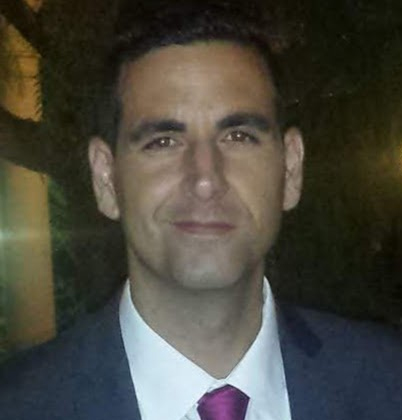
Francisco A. Gómez received his PhD in Computer Science from the Pablo de Olavide University of Seville, obtaining a qualification of Cum Laude , in addition to Computer Science Engineer by the University of Seville.
His lines of research are focused on the treatment of information using intelligent techniques, applying Machine Learning and data mining techniques.
He has focused mainly on the analysis of genetic and biomedical data in his research. In addition, he has recently focused on the research of new Big Data techniques for the exploitation of different types of data. Currently, he is focused on applying new algorithms for the analysis of energy data in the environment of smart buildings and smart cities.
Finally, it has participated in national research projects, as follows as well as R+D+I transfer projects and contracts in this field.
Teaching
Computer Science (Information Systems), Pablo de Olavide University.
- Bioinformatics.
- Fundamentals of Programming.
- Project Engineering.
- Object Oriented Programming.
- Final Degree Project.
Biotechnology, Pablo de Olavide University.
- Computer Science.
- Final Degree Project.
Computer Science, Pablo de Olavide University.
- Mobile devices.
- Final Master Project.
History and Digital Humanities, Pablo de Olavide University.
- Methodology for research in digital history and humanities II.
Related links
Publications
2020 |
D. Rodríguez-Baena; F. Gómez-Vela; M. García-Torres; F. Divina; C. D. Barranco; N. Díaz-Díaz; M. Jiménez; G. Montalvo Identifying livestock behavior patterns based on accelerometer dataset Journal Article In: Journal of Computational Science, vol. 41, pp. 101076, 2020, ISSN: 1877-7503. @article{Rodríguez-Baena2020,In large livestock farming it would be beneficial to be able to automatically detect behaviors in animals. In fact, this would allow to estimate the health status of individuals, providing valuable insight to stock raisers. Traditionally this process has been carried out manually, relying only on the experience of the breeders. Such an approach is effective for a small number of individuals. However, in large breeding farms this may not represent the best approach, since, in this way, not all the animals can be effectively monitored all the time. Moreover, the traditional approach heavily rely on human experience, which cannot be always taken for granted. To this aim, in this paper, we propose a new method for automatically detecting activity and inactivity time periods of animals, as a behavior indicator of livestock. In order to do this, we collected data with sensors located in the body of the animals to be analyzed. In particular, the reliability of the method was tested with data collected on Iberian pigs and calves. Results confirm that the proposed method can help breeders in detecting activity and inactivity periods for large livestock farming. |
2018 |
A. Lopez-Fernandez; D. Rodríguez-Baena; F. Gómez-Vela; N. Díaz-Díaz BIGO: A web application to analyse gene enrichment analysis results Journal Article In: Computational biology and chemistry, vol. 76, pp. 169-178, 2018, ISSN: 1476-9271. @article{Lopez-Fernandez2018,Background and objective Gene enrichment tools enable the analysis of the relationships between genes with biological annotations stored in biological databases. The results obtained by these tools are usually difficult to analyse. Therefore, researchers require new tools with friendly user interfaces available on all types of devices and new methods to make the analysis of the results easier. Methods In this work, we present the BIGO Web tool. BIGO is a friendly Web tool to perform enrichment analyses of a collection of gene sets. On the basis of the obtained enrichment analysis results, BIGO combines the biological terms to organize them and graphically represents the relationships between gene sets to make the interpretations of the results easier. Results BIGO offers useful services that provide the opportunity to focus on a concrete subset of results by discarding too general biological terms or to obtain useful knowledge by means of the visual analysis of the functional connections between the sets of genes being analysed. Conclusions BIGO is a web tool with a novel and modern design that provides the possibility to improve the analysis tasks applied to gene enrichment results. |
J. J. Díaz-Montaña; F. Gómez-Vela; N. Díaz-Díaz GNC–app: A new Cytoscape app to rate gene networks biological coherence using gene–gene indirect relationships Journal Article In: Biosystems, vol. 166, pp. 61-65, 2018, ISSN: 0303-2647. @article{Díaz-Montaña2018,Motivation Gene networks are currently considered a powerful tool to model biological processes in the Bioinformatics field. A number of approaches to infer gene networks and various software tools to handle them in a visual simplified way have been developed recently. However, there is still a need to assess the inferred networks in order to prove their relevance. Results In this paper, we present the new GNC-app for Cytoscape. GNC-app implements the GNC methodology for assessing the biological coherence of gene association networks and integrates it into Cytoscape. Implemented de novo, GNC-app significantly improves the performance of the original algorithm in order to be able to analyse large gene networks more efficiently. It has also been integrated in Cytoscape to increase the tool accessibility for non-technical users and facilitate the visual analysis of the results. This integration allows the user to analyse not only the global biological coherence of the network, but also the biological coherence at the gene–gene relationship level. It also allows the user to leverage Cytoscape capabilities as well as its rich ecosystem of apps to perform further analyses and visualizations of the network using such data. Availability The GNC-app is freely available at the official Cytoscape app store: http://apps.cytoscape.org/apps/gnc. |
2017 |
F. Gómez-Vela; A. Lopez-Fernandez; J. A. Lagares; D. Rodríguez-Baena; C. D. Barranco; M. García-Torres; F. Divina Bioinformatics from a Big Data Perspective: Meeting the Challenge Conference IWBBIO 2017: Bioinformatics and Biomedical Engineering, pp. 349-359, Springer International Publishing, Cham, 2017, ISBN: 978-3-319-56154-7. @conference{Gómez-Vela2017,Recently, the rising of the Big Data paradigm has had a great impact in several fields. Bioformatics is one such field. In fact, Bioinfomatics had to evolve in order to adapt to this phenomenon. The exponential increase of the biological information available, forced the researchers to find new solutions to handle these new challenges. |
J. J. Díaz-Montaña; N. Díaz-Díaz; F. Gómez-Vela GFD-Net: A novel semantic similarity methodology for the analysis of gene networks Journal Article In: Journal of Biomedical Informatics, vol. 68, pp. 71-82, 2017, ISSN: 1532-0464. @article{Díaz-Montaña2017,Since the popularization of biological network inference methods, it has become crucial to create methods to validate the resulting models. Here we present GFD-Net, the first methodology that applies the concept of semantic similarity to gene network analysis. GFD-Net combines the concept of semantic similarity with the use of gene network topology to analyze the functional dissimilarity of gene networks based on Gene Ontology (GO). The main innovation of GFD-Net lies in the way that semantic similarity is used to analyze gene networks taking into account the network topology. GFD-Net selects a functionality for each gene (specified by a GO term), weights each edge according to the dissimilarity between the nodes at its ends and calculates a quantitative measure of the network functional dissimilarity, i.e. a quantitative value of the degree of dissimilarity between the connected genes. The robustness of GFD-Net as a gene network validation tool was demonstrated by performing a ROC analysis on several network repositories. Furthermore, a well-known network was analyzed showing that GFD-Net can also be used to infer knowledge. The relevance of GFD-Net becomes more evident in Section “GFD-Net applied to the study of human diseases†where an example of how GFD-Net can be applied to the study of human diseases is presented. GFD-Net is available as an open-source Cytoscape app which offers a user-friendly interface to configure and execute the algorithm as well as the ability to visualize and interact with the results(http://apps.cytoscape.org/apps/gfdnet). |
2016 |
F. Gómez-Vela; C. D. Barranco; N. Díaz-Díaz Incorporating biological knowledge for construction of fuzzy networks of gene associations Journal Article In: Applied Soft Computing, vol. 42, pp. 144-155, 2016, ISSN: 1568-4946. @article{Gómez-Vela2016,Gene association networks have become one of the most important approaches to modelling of biological processes by means of gene expression data. According to the literature, co-expression-based methods are the main approaches to identification of gene association networks because such methods can identify gene expression patterns in a dataset and can determine relations among genes. These methods usually have two fundamental drawbacks. Firstly, they are dependent on quality of the input dataset for construction of reliable models because of the sensitivity to data noise. Secondly, these methods require that the user select a threshold to determine whether a relation is biologically relevant. Due to these shortcomings, such methods may ignore some relevant information. We present a novel fuzzy approach named FyNE (Fuzzy NEtworks) for modelling of gene association networks. FyNE has two fundamental features. Firstly, it can deal with data noise using a fuzzy-set-based protocol. Secondly, the proposed approach can incorporate prior biological knowledge into the modelling phase, through a fuzzy aggregation function. These features help to gain some insights into doubtful gene relations. The performance of FyNE was tested in four different experiments. Firstly, the improvement offered by FyNE over the results of a co-expression-based method in terms of identification of gene networks was demonstrated on different datasets from different organisms. Secondly, the results produced by FyNE showed its low sensitivity to noise data in a randomness experiment. Additionally, FyNE could infer gene networks with a biological structure in a topological analysis. Finally, the validity of our proposed method was confirmed by comparing its performance with that of some representative methods for identification of gene networks |
2015 |
F. Gómez-Vela; J. A. Lagares; N. Díaz-Díaz Gene network coherence based on prior knowledge using direct and indirect relationships Journal Article In: Computational Biology and Chemistry, vol. 56, pp. 142-151, 2015, ISSN: 1476-9271. @article{Gómez-Vela2015,Gene networks (GNs) have become one of the most important approaches for modeling biological processes. They are very useful to understand the different complex biological processes that may occur in living organisms. Currently, one of the biggest challenge in any study related with GN is to assure the quality of these GNs. In this sense, recent works use artificial data sets or a direct comparison with prior biological knowledge. However, these approaches are not entirely accurate as they only take into account direct gene–gene interactions for validation, leaving aside the weak (indirect) relationships. We propose a new measure, named gene network coherence (GNC), to rate the coherence of an input network according to different biological databases. In this sense, the measure considers not only the direct gene–gene relationships but also the indirect ones to perform a complete and fairer evaluation of the input network. Hence, our approach is able to use the whole information stored in the networks. A GNC JAVA-based implementation is available at: http://fgomezvela.github.io/GNC/. The results achieved in this work show that GNC outperforms the classical approaches for assessing GNs by means of three different experiments using different biological databases and input networks. According to the results, we can conclude that the proposed measure, which considers the inherent information stored in the direct and indirect gene–gene relationships, offers a new robust solution to the problem of GNs biological validation. |
2011 |
N. Díaz-Díaz; F. Gómez-Vela; J. Aguilar-Ruiz; J. García-Gutiérrez Gene-gene interaction based clustering method for microarray data Conference 2011 11th International Conference on Intelligent Systems Design and Applications, 2011, ISSN: 2164-7151. @conference{Díaz-Díaz2011b,In this paper, we propose a greedy clustering algorithm to identify groups of related genes and a new measure to improve the results of this algorithm. Clustering algorithms analyze genes in order to group those with similar behavior. Instead, our approach groups pairs of genes that present similar positive and/or negative interactions. In order to avoid noise in clusters, we apply a threshold, the neighbouring minimun index(?), to know if a pair of genes have interaction enough or not. The algorithm allows the researcher to modify all the criteria: discretization mapping function, gene-gene mapping function and filtering function, and even the neighbouring minimun index, and provides much flexibility to obtain clusters based on the level of precision needed. We have carried out a deep experimental study in databases to obtain a good neighbouring minimun index, ?. The performance of our approach is experimentally tested on the yeast, yeast cell-cycle and malaria datasets. The final number of clusters has a very high level of customization and genes within show a significant level of cohesion, as it is shown graphically in the experiments. |
F. Gómez-Vela; F. Martínez-Álvarez; C. D. Barranco; N. Díaz-Díaz; D. Rodríguez-Baena; J. Aguilar-Ruiz Pattern Recognition in Biological Time Series Journal Article In: Advances in Artificial Intelligence, pp. 164-172, 2011, ISBN: 978-3-642-25274-7. @article{Gómez-Vela2011b,Knowledge extraction from gene expression data has been one of the main challenges in the bioinformatics field during the last few years. In this context, a particular kind of data, data retrieved in a temporal basis (also known as time series), provide information about the way a gene can be expressed during time. This work presents an exhaustive analysis of last proposals in this area, particularly focusing on those proposals using non--supervised machine learning techniques (i.e. clustering, biclustering and regulatory networks) to find relevant patterns in gene expression. |
F. Gómez-Vela; N. Díaz-Díaz; J. Aguilar-Ruiz Gene Networks Validation based on Metabolic Pathways Conference 2011 IEEE 11th International Conference on Bioinformatics and Bioengineering, 2011. @conference{Gómez-Vela2011,In the last few years, DNA microarray technology has attained a very important role in biological and biomedical research. It enables analyzing the relations among thousands of genes simultaneously, generating huge amounts of data. The gene networks represent, in a graph data structure, genes or gene products and the functional relationships between them. These models have been fully used in Bioinformatics because they provide an easy way to understand gene expression regulation. Nowadays, a lot of gene network algorithms have been developed as knowledge extraction techniques. A very important task in all these studies is to assure the network models reliability in order to prove that the methods used are precise. This validation process can be carried out by using the inherent information of the input data or by using public biological knowledge. In this last case, these sources of information provide a great opportunity of verifying the biological soundness of the generated networks. In this work, authors present a gene network validation methodology based on the information stored in Kegg database. With this aim, a complete Kegg pathway conversion to gene network is presented, and a global and functional validation process is proposed, where the whole metabolical information stored in Kegg is used at the same time. |
N. Díaz-Díaz; F. Gómez-Vela; D. Rodríguez-Baena; J. Aguilar-Ruiz Gene Regulatory Networks Validation Framework Based in KEGG Conference Hybrid Artificial Intelligent Systems, 2011, ISBN: 978-3-642-21222-2. @conference{Díaz-Díaz2011,In the last few years, DNA microarray technology has attained a very important role in biological and biomedical research. It enables analyzing the relations among thousands of genes simultaneously, generating huge amounts of data. The gene regulatory networks represent, in a graph data structure, genes or gene products and the functional relationships between them. These models have been fully used in Bioinformatics because they provide an easy way to understand gene expression regulation. |