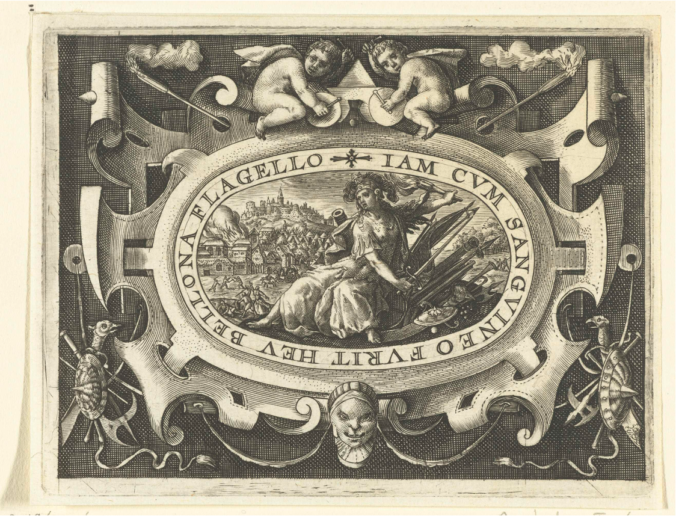
On 5 and 6 March 2026, the International Seminar “Transgression: The Justification, Critique and Negotiation of Extreme Violence” will take place at the Sede Olavide en Carmona (Universidad Pablo de Olavide).
By focusing on the justification, critique, and negotiation of acts perceived as transgressive, the seminar directly engages with one of the central research questions of the project En los límites de la violencia: how historical actors defined the boundaries of legitimate violence and how those boundaries were contested, reshaped, and institutionalised over time. Rather than treating extreme violence solely as rupture or breakdown, the seminar explores the normative frameworks, discursive strategies, and institutional mechanisms through which acts such as massacre, enslavement, sexual violence, or urban destruction were debated and sometimes legitimised. In doing so, it contributes to the project’s broader aim of understanding violence not only as event, but as a historically situated practice embedded within moral economies, legal cultures, and political rationalities from Antiquity to the modern era.
Thursday, 5 March
09:00–09:15
Welcome and introduction – Harald E. Braun / Igor Pérez-Tostado
Panel 1: Ancient & Medieval – Transgression, Norms and Justification
09:15–11:45
- Tristan S. Taylor – “Iniuria humani generis? The Ethics of Mass Violence in Greco-Roman Antiquity”
- Nathalie Barrandon – “Parabainô: Violences extrêmes et transgression en temps de guerre dans l’Antiquité gréco-romaine”
- Stefanie Rüther – “Justified? Dealing with Transgressive Violence in Medieval Wars before International Law”
11:45–12:15
Coffee Break
Panel 2: Early Modernity I – Failure of Government and Transgressive Violence
12:15–13:45
- Harald E. Braun – “Reason of State as Reason of Peace? Atrocity, Empathy and Theory of Governance during the Thirty Years’ War”
- Thomas Pert – “Terror Tactics or Unauthorized Excesses? Articles of War, Discipline, and Atrocity in the Thirty Years’ War”
14:00–16:00
Lunch – Bar Castaño
Panel 3: Early Modernity II – Negotiating Rules of Engagement
16:00–17:30
- Jérémie Foa – “The St. Bartholomew’s Day Massacre (France, 1572): Between Silence and Justification”
- Marian Füssel – “‘Fury and Barbarity which former Wars were unacquainted with’: The Burning and Destruction of Cities as a War Crime in the Age of the Wars of Succession (1688–1748)”
17:30–18:30
End of Day 1 Roundtable Discussion
Conference Dinner
Friday, 6 March
Panel 4: Gender and Transgressive Violence
09:15–11:45
- Tamar Herzig – “Gender, Enslavement, and Transgressive Violence in Mediterranean Catholic Europe in the Seventeenth Century”
- Nil Abend – “Enslavement and Transgressive Violence in Early Modern Spain”
- Sandra Suárez García – “‘I am a young man of good repute, conduct, and conversation’: The Making of Soldiers’ Defences against Accusations of Violence towards Women in the Hispanic Monarchy (16th–17th Centuries)”
11:45–12:15
Coffee Break
Panel 5: From Early Modern Normativity to Modern Moral Economies
12:15–13:45
- Christian Ingrao – “Beyond Impunity and Anomy: Justification, Moral Economy and Transgression in the Einsatzgruppen of the Soviet Union”
Concluding Roundtable Discussion
Igor Pérez-Tostado – Concluding Remarks
14:00
Closing Lunch – Hotel Alcázar de la Reina
The poster is available here: https://www.upo.es/investiga/limites-violencia/wp-content/uploads/2026/02/Cartel-Transgression.pdf
The full program is available here: https://www.upo.es/investiga/limites-violencia/wp-content/uploads/2026/02/Cartel-Transgression.pdf


 English
  Spanish