Upcoming Dates
Session 1: 24 – 28 May, 2027
Session 2: 31 May – 4 June, 2027
Course Description
This course provides current and future teachers of Spanish as a Foreign Language with a well-rounded training experience that strengthens methodological competencies and encourages critical reflection on everyday teaching practice.
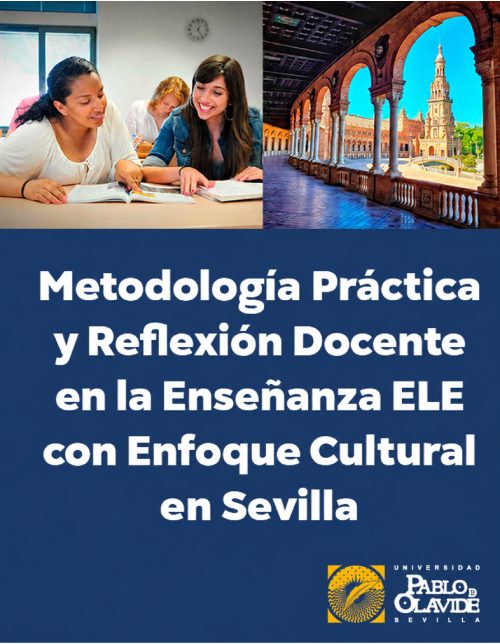
Through a cultural approach linked to the city of Seville, the program combines theory, practical workshops, and immersion activities to explore how to integrate culture into Spanish language teaching in a meaningful, inclusive, and motivating way.
Participants will analyze current approaches, design authentic materials based on real contexts by drawing on the local culture of Seville as a teaching resource (art, gastronomy, festivals, and street life) and share experiences that foster the development of a more conscious, creative, and effective instructional practice.
Goals
General Objective
To support teachers of Spanish as a Foreign Language in designing, delivering, and evaluating engaging lessons that respond to their students’ real needs, while placing culture at the heart of learning and teaching reflection.
Specific Objectives
-
To design teaching sequences that integrate comprehension, production, linguistic reflection, and cultural content.
-
To select and adapt authentic resources (videos, songs, social media, texts, games) for meaningful teaching and learning.
-
To create a collaborative repository of innovative teaching materials and resources.
-
To promote professional reflection and exchange on common challenges (motivation, classroom management, assessment, educational AI).
-
To analyze and apply assessment and effective feedback tools adapted to the SFL classroom.
Price
Admission information
A minimum course enrollment of 10 students must be met for each course to be offered
-
- Language : Spanish
- Language level required: B2 or above
- Duration : 5 days (25 hours)
Tentative Schedule
Content:
Current approaches and methodologies in Spanish as a Foreign Language (communicative approach, task-based learning, lexical approach, cooperative learning).
How to plan a learner-centered class: objectives, skills, and teaching sequence.
Integrating culture and language in real-life contexts (communicative situations, Seville-based settings).
Practical activities:
Analysis of teaching sequence models.
Workshop: initial design of a communicative sequence with a cultural component.
Group sharing and peer feedback.
Content:
Criteria for selecting and adapting authentic materials.
Digital and multimedia resources to energize the classroom (videos, podcasts, social media, AI).
Practical activities:
Workshop: transforming an authentic resource (video, song, news item, poster) into a teaching activity.
Collaborative creation of materials for the course’s teaching resource repository.
Discussion: advantages and limitations of using AI and digital resources in SFL teaching.
Content:
Assessment as a formative and ongoing process.
A range of tools: rubrics, portfolios, observation, self-assessment, guided feedback.
Error treatment: positive and motivating strategies.
Practical activities:
Workshop: designing a short rubric to assess an oral or written task.
Analysis of real examples of formative assessment.
Simulation: giving and receiving effective feedback among teachers.
Content:
The city as a pedagogical resource: learning Spanish through the environment.
Strategies for turning cultural experiences into teaching sequences.
Active observation: language, culture, and real-life context.
Practical activities:
Guided walk with observation tasks and collection of linguistic and cultural materials.
Activity “The City as Text”: recording expressions, signs, and real interactions.
Group reflection: how to bring local culture into the SFL classroom.
Content:
-
Living and contemporary culture: art, music, gastronomy, and present-day Sevillian society.
-
Collaborative creation of projects and materials.
-
Space for teaching reflection and shared discussion of learning outcomes.
Request information about our courses