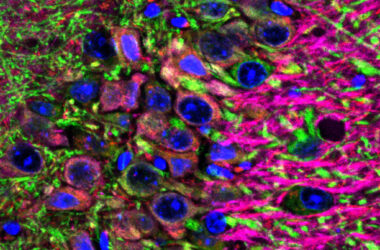
A study using a new animal model of Alzheimer’s disease suggests a potential breakthrough in treatment strategies. Current therapies mainly focus on blocking just one of the toxic proteins associated with the disease, but this discovery could pave the way for more comprehensive approaches.
English
Universidad Pablo de Olavide – News in English
The two proteins involved in Alzheimer’s disease affect brain circuits differently

The sparrows of Madrid challenge natural selection as the only process of evolutionary adaptation
An experiment carried out by researchers from the Complutense University of Madrid (UCM) and the Pablo de Olavide University (UPO) in Seville (Spain) shows that performance-based habitat selection can also drive the adaptation process.

Remembering and forgetting by selective changes in brain circuits
Memories make us who we are. From one day to the next, we acquire new memories and build a directory of facts and events and their associations. With this «directory of memories» stored in our brain, we make sense of our surroundings and ourselves, judge, make decisions, and take calculated behavioral actions. Living independently would become extremely challenging without the[Leer más…]

University Pablo de Olavide cooperates with 11 European universities in EURESTRA
Twelve HE institutions across Europe have joined forces to enrich the European Higher Education and Research Areas with a portfolio of creative and cutting-edge joint activities working towards a responsible transformation with an innovative approach. In the future, they hope to cooperate in EURESTRA – a European University for Responsible Transformation.

Paul Nurse: “Boundaries are broken most often by the young, so we have to encourage and support them”
Pablo de Olavide University, in celebration of the 25th anniversary since its foundation, awarded Nurse the title of honorary doctor. The following conversation took place in UPO’s headquarters in Carmona, a historical town located a few miles away from Seville, where he met with his colleagues during his stay.
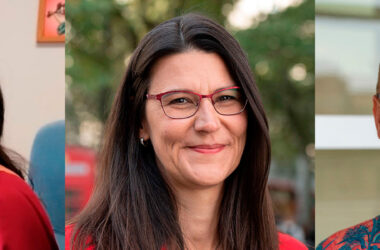
Creation of ECREABIEN: an initiative of research and transfer on entrepreneurship and psychosocial well-being with a gendered approach
Universidad Pablo de Olavide, King’s College London and Syracuse University sign an agreement to promote research and transfer activities on entrepreneurial creativity and well-being with a gendered approach.

The Universidad Pablo de Olavide offers 2561 places to newly arrived students with its 48 undergraduate degrees for the 2021-22 academic year
The Universidad Pablo de Olavide will offer a total of 2561 places to newly arrived students with its 48 undergraduate degrees for the next 2021-22 academic year, 40 of which will be imparted at the campus of the UPO (2127 places) and 8 at its affiliated centre in Seville, ‘San Isidoro’ (434 places).
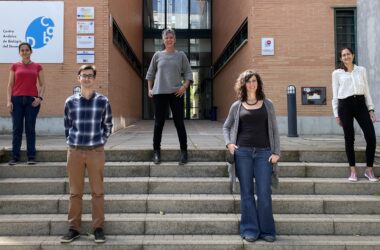
Advances in research on cell mechanisms that interact with mitochondrial activity to regulate ageing
Understanding the complex interaction between different cell signaling pathways and mitochondrial function means advancing to counteract ageing. This is the basis of a study carried out by a research group from Universidad Pablo de Olavide, led by researcher Marta Artal Sanz from the Department of Molecular Biology and Biochemistry Engineering. The study has been published in the scientific journal Aging Cell and it has been funded by the program H2020 ERC-Starting Grant ‘Mitochondrial signaling crosstalk in the regulation of ageing (MitoSigAge)’.
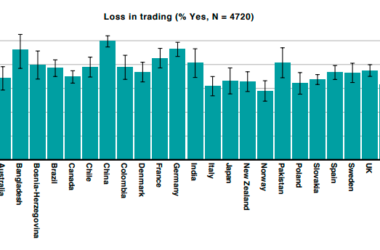
Six out of ten entrepreneurs consider the existence of their businesses threatened by the coronavirus
Universidad Pablo de Olavide co-leads an international research, funded by the King’s College London, which analyzes the impact of the pandemic on entrepreneurs from 23 countries.
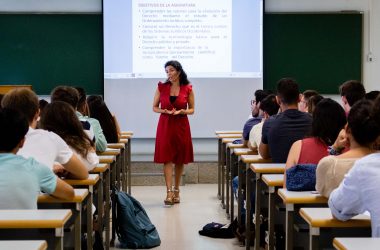
The UPO heads the academic performance among the public universities from Andalusia with 81.9%
The foundation Fundación CYD (Knowledge and Development, after its Spanish acronym) has recently published the statistical report ‘Las universidades españolas. Una perspectiva autonómica. 2020. Andalucía’ (‘Spanish universities. A regional perspective. 2020. Andalusia’, written in Spanish) in which it offers the main data of its annual report about the Spanish university system divided by regions. The report, which has been written using the data from the SIIU (Integrated System of University Information, after its Spanish acronym), places the Pablo de Olavide University as the only one among the public universities from Andalusia with an academic performance rate over 80% (81.9%) and the one with the lowest dropout rate of first year students (15.2%). The UPO also heads the percentage of traditional age graduates (below 25 years old for the undergraduate studies and below 30 for the master’s and doctorate degrees) with 84.6%, and it is the university with the highest percentage of full time students (84.4%). This data shows that the UPO heads the academic performance among the Andalusian public universities.
23 – 30 septiembre